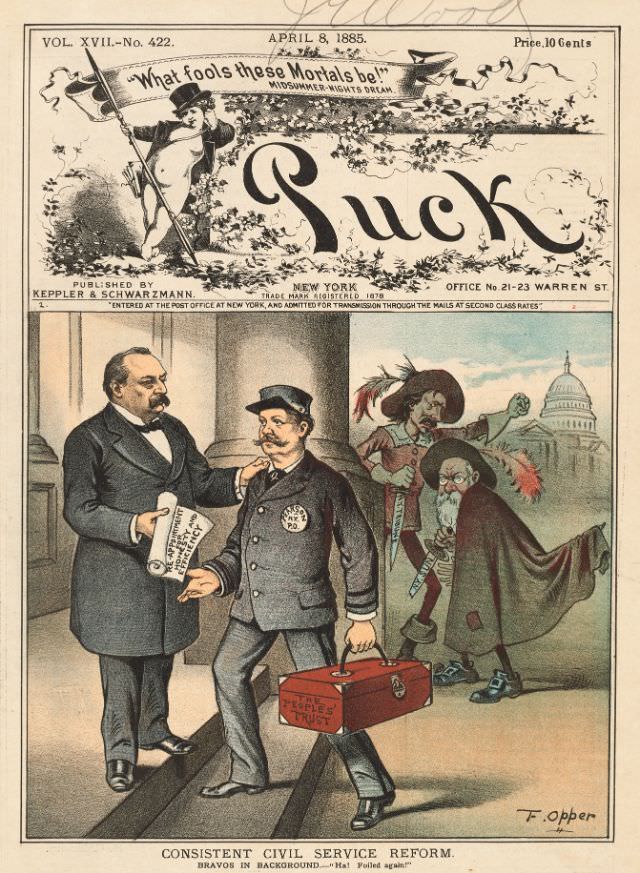
Bold lettering unfurls across a floral scroll to announce *Puck*, framed by the magazine’s familiar theatrical flair and a banner quoting “What fools these mortals be!” The cover is dated April 8, 1885, with publication details and a 10-cent price line, anchoring the artwork firmly in the bustling world of late-19th-century American illustrated satire. Even before the main scene begins, the design signals a publication that mixed wit, politics, and showmanship into a single eye-catching package.
Down below, the cartoon centers on a stout, well-dressed man guiding a uniformed worker forward, while a paper labeled “Reform” and “No Patronage” draws the viewer’s eye. The worker carries a red toolbox marked “The Tools,” a practical symbol amid the grand promises of governance, and the caption at the bottom reads “CONSISTENT CIVIL SERVICE REFORM.” In Puck’s visual language, props, posture, and exaggerated features work together to stage a pointed argument about how reform is performed—and who is expected to shoulder its burdens.
Behind them, costumed figures and the U.S. Capitol dome suggest that Washington politics is both spectacle and battleground, with bravado and backroom maneuvering never far from the public stage. Signed “F. Opper,” the illustration reflects the magazine’s knack for turning contemporary debates into memorable characters and scenes, ideal for readers then and researchers now. For anyone exploring Gilded Age politics, civil service reform, or the history of American editorial cartoons, this Puck cover offers a vivid doorway into the era’s anxieties and ambitions.