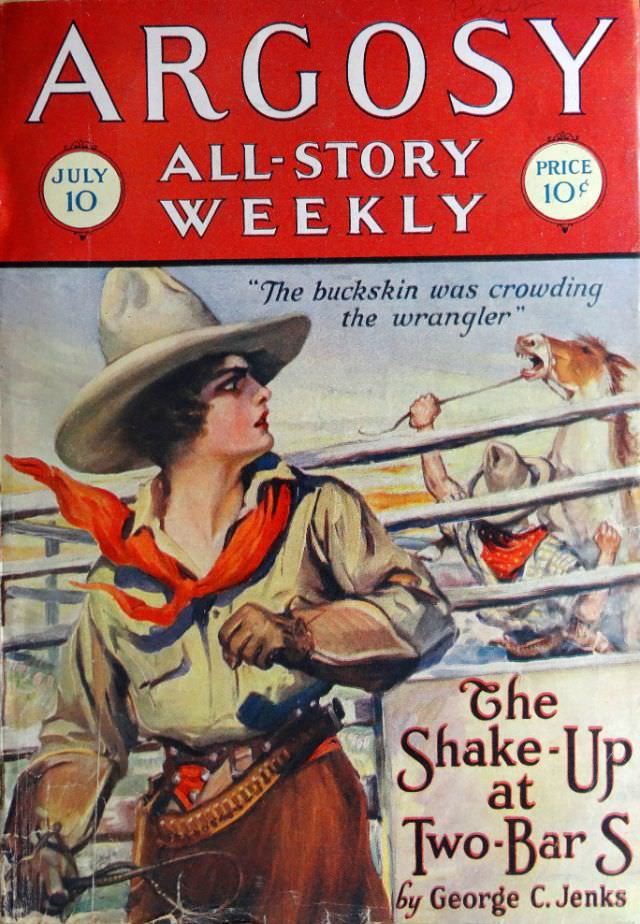
Bold red lettering crowns the July 10, 1926 issue of Argosy All-Story Weekly, with the 10¢ price tucked into a small circle like a promise of affordable thrills. The cover art plunges straight into Western tension: a hat-brimmed wrangler in a dusty shirt and neckerchief turns sharply, gloved hand raised, pistol at the ready. Behind the corral rails, a horse rears and a figure tumbles, the action framed like a freeze-frame from a pulp adventure.
Drama is intensified by the illustrator’s choices—wind-whipped scarf, diagonal fence lines, and a pale sky that makes the central figure pop. A caption near the top, “The buckskin was crowding the wrangler,” sets the stakes in a single line, hinting at close quarters and sudden danger. Down in the lower right, the story title “The Shake-Up at Two-Bar S…” (partially cropped) and the byline “by George C. Jenks” anchor the scene in the magazine’s serialized storytelling tradition.
Argosy covers like this one were designed to stop readers at the newsstand, selling not just a story but a whole mood of frontier suspense and hard-edged heroism. For collectors of vintage magazine covers, pulp illustration, and classic Western ephemera, this July 1926 artwork offers a vivid snapshot of popular culture’s appetite for action. It’s also a reminder of how cover art functioned as both advertisement and short-form narrative—one glance, and you’re already in the middle of the chase.