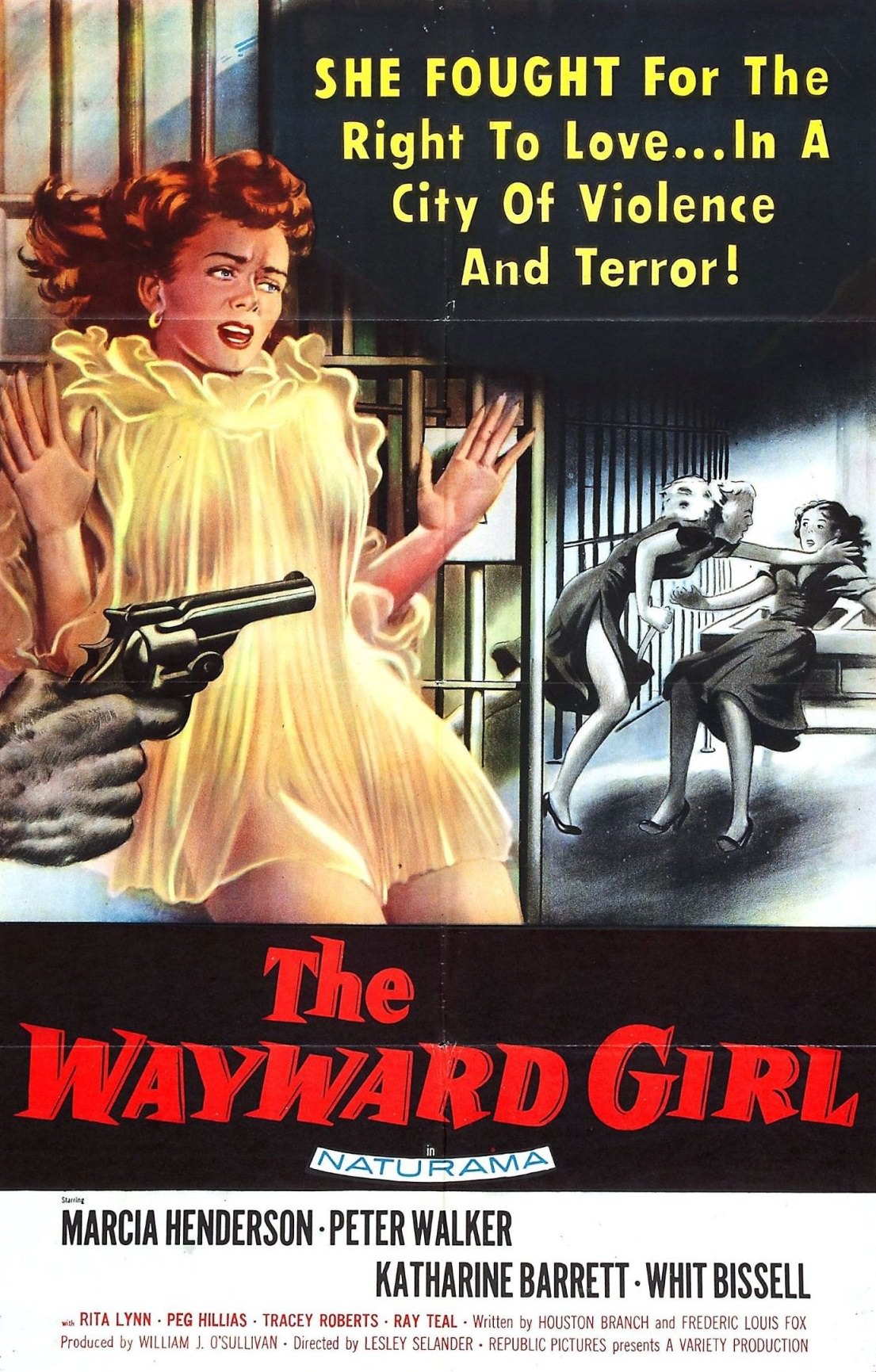
Pulp-meets-melodrama energy bursts from this 1957 cover art for *The Wayward Girl*, where a frightened young woman in a glowing yellow dress raises her hands as a gun intrudes from the foreground. Bold, breathless lettering promises high stakes—“She fought for the right to love…”—while iron bars and hard shadows frame the scene like a trap closing in. The design leans into mid-century exploitation and crime-film advertising, using exaggerated color and peril to stop a passerby cold.
Along the right side, a stark grayscale vignette contrasts with the saturated central figure: two women grapple near barred doors, suggesting a locked-in world of coercion, control, and panic. That split look—lush color versus documentary-like monochrome—creates a lurid “headline” effect typical of 1950s movie poster illustration, where morality and danger are staged as spectacle. Even without a specific place named, the visual language sells a “city of violence and terror” through architecture alone: metal gates, narrow corridors, and no obvious exit.
For collectors of vintage film posters, 1950s cinema memorabilia, and Republic Pictures ephemera, *The Wayward Girl (1957)* offers a compact lesson in how studios marketed sensational social drama. The type choices, the theatrical lighting, and the threatened heroine all point to an era when cover art did as much storytelling as the trailer. Whether you’re researching classic poster design or curating a retro movie art gallery, this striking piece remains a vivid time capsule of its moment.