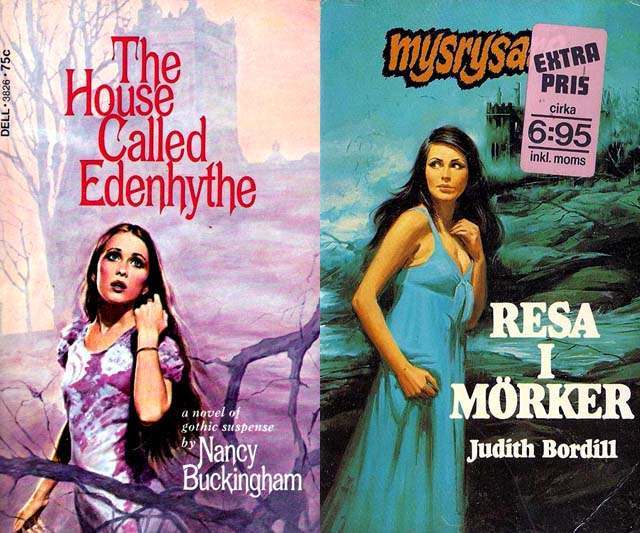
Two paperback covers sit side by side, each centered on a frightened heroine caught in the moment between flight and confrontation. On the left, “The House Called Edenhythe” frames a pale, looming manor behind bare branches, while the woman’s wide-eyed glance and clenched hands telegraph dread as clearly as the painted mist. On the right, a Swedish edition—“Mysrysare” with the title “Resa i mörker”—places a similarly tense figure in a blue dress against darker ruins and shadowed sky, with bold, high-contrast lettering and a prominent price stamp that roots it in mass-market circulation.
Gothic romance cover art repeatedly returns to the visual drama of women running from houses because it compresses an entire plot into a single, instantly readable symbol. The house becomes an engine of psychological pressure—secrets in the architecture, threat in the windows, memory in the corridors—while the fleeing figure embodies both vulnerability and agency. That split-second pose, head turned back and body angled away, invites the reader to feel suspense and anticipation at once: what she knows, what she fears, and what she’s about to discover.
Small design choices amplify the appeal for collectors and readers who search for vintage gothic romance covers, “woman in peril” motifs, and classic pulp illustration. Painted fog, jagged branches, and the contrast between soft fabric and harsh stone create a tactile sense of danger without revealing specifics, keeping the story tantalizingly unsolved. Together these covers illustrate how the genre sells emotion first—anxious atmosphere, haunted domesticity, and the promise that the heroine’s escape will also be a journey into the darker rooms of the mind.