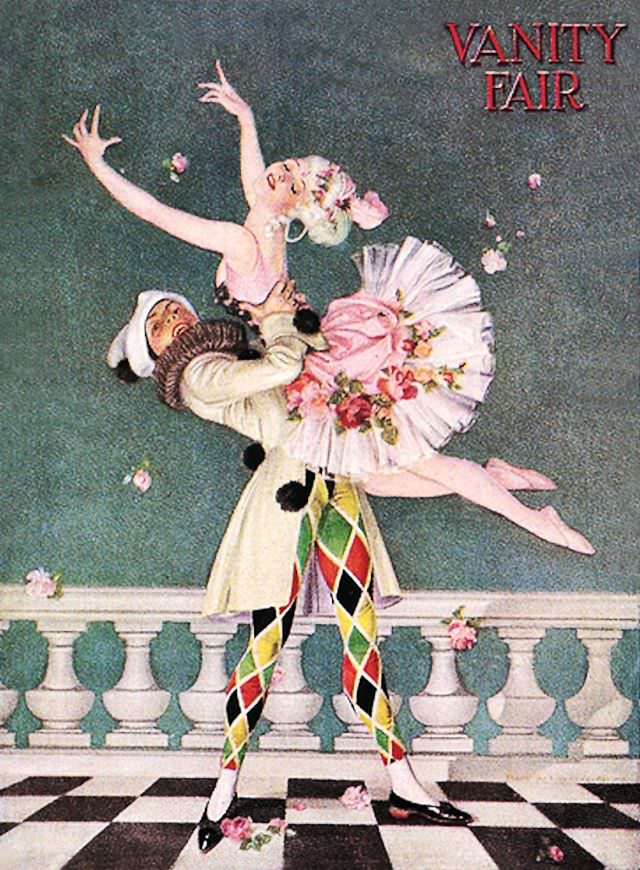
Bold lettering announces “Vanity Fair” above a stage-like tableau where a ballerina in a pink, flower-trimmed tutu is swept upward in midair. Her arms reach skyward as rose petals drift around her, turning the cover into a frozen moment of performance and applause. Against a muted green backdrop, the pale costume, soft blush tones, and scattered blossoms read as pure spectacle—fashion illustration meeting theater poster.
Below her, a Pierrot-style clown provides the drama and contrast: a light costume with dark pom-poms, a ruffled collar, and striking harlequin-patterned tights in bright diamond colors. The black-and-white checkerboard floor and low balustrade suggest a ballroom, a proscenium, or an elegant terrace, grounding the airborne movement in crisp geometry. The pairing of clown and dancer leans into the playful tension of comedy and romance that early 20th-century audiences loved.
As a Vanity Fair cover from January 1917, this artwork offers a vivid snapshot of period tastes—ballet chic, theatrical masquerade, and the magazine’s flair for witty, stylish fantasy. The composition is designed to catch the eye from a newsstand: strong diagonals, decorative details, and a sense of motion that pulls you into the scene. For collectors of vintage magazine covers, theater history enthusiasts, or anyone drawn to early 1900s illustration, it remains a memorable example of how print culture sold glamour and escape in a single image.