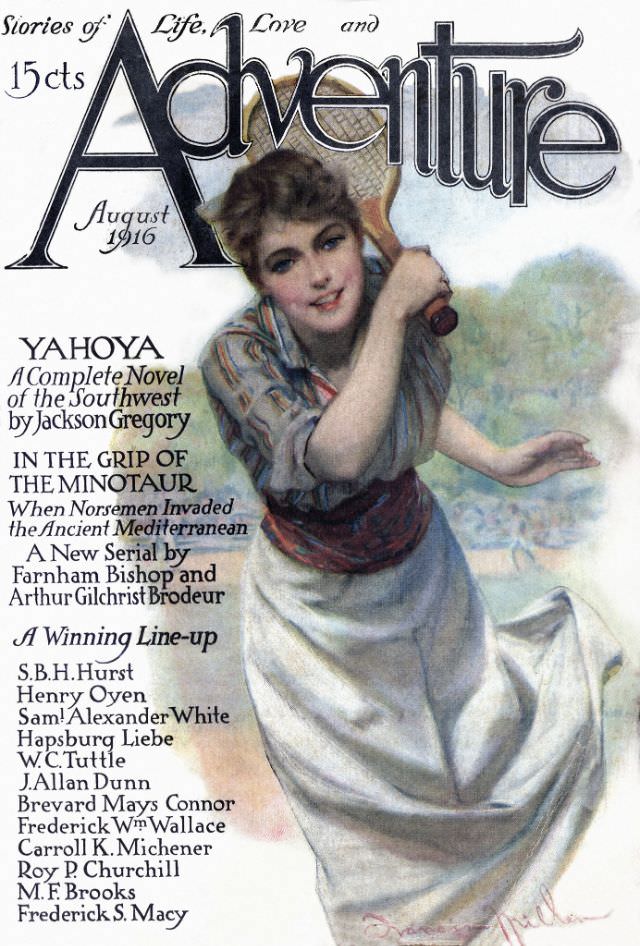
Bold lettering spills across the top of the page—“Adventure,” priced at 15 cents—setting the tone for a pulp-era magazine cover dated August 1916. The illustration centers on a young woman in motion, sleeves rolled and skirt sweeping, her body turned as if she’s darting past danger just outside the frame. Soft washes of color and a hazy outdoor backdrop lend a romantic, storybook feel while still promising the urgency that the title implies.
Her pose does much of the narrative work: an arm raised around a dark-handled object, a half-smile that reads as confident rather than frightened, and a forward lean that suggests escape, pursuit, or both. The artist balances glamour with action, a common strategy in early 20th-century adventure fiction art, where peril and attraction often shared the same stage. Even without opening the issue, the cover sells momentum—wind, haste, and a plot already underway.
Text on the left functions like a table of contents in miniature, advertising “Yahoya, A Complete Novel of the Southwest” and “In the Grip of the Minotaur,” alongside a roster of contributors. Those lines offer useful clues for collectors and researchers interested in pulp magazines, adventure stories, and magazine illustration history, and they help anchor the cover within its publishing context. For WordPress readers browsing vintage ephemera, this “Adventure” cover is an evocative snapshot of how 1916 popular culture packaged suspense, travel, and myth into a single striking page.