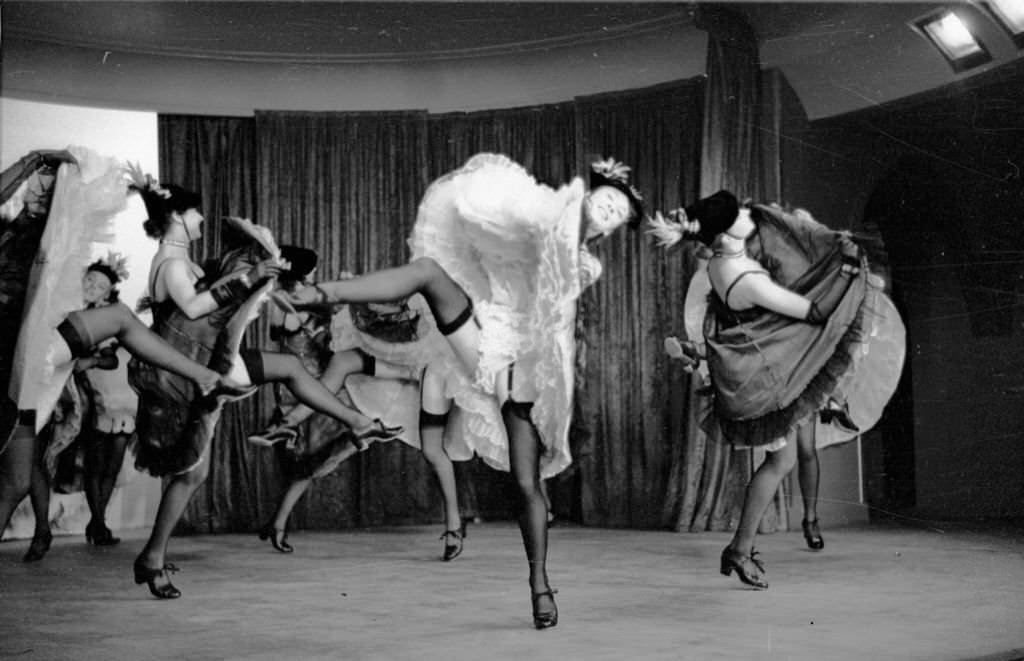
Legs fly in a sharp line across the stage as a troupe of can-can dancers hit a synchronized kick, skirts fanned high to reveal layers of petticoats and stockings. The scene is set against heavy curtains and bright overhead lights, with feathered headpieces and high heels adding sparkle to the fast, teasing choreography. Captured mid-motion, the performers’ lifted hems and arched backs underline why the can-can became synonymous with daring showmanship.
Staged as part of ‘The Blue Bird’ at London’s Pigalle restaurant in 1953, the number belongs to a coronation-year nightlife that mixed national celebration with cosmopolitan cabaret. While the city marked Queen Elizabeth II’s new reign with ceremony and street pageantry, venues like this offered an after-hours counterpoint—glamour, music, and a wink of continental Paris. The dancers’ costumes leave little to the imagination, yet the precision of their timing reminds you it’s also athletic work, built on stamina and discipline.
In the broader history of 20th-century entertainment, images like this trace how the can-can evolved from boisterous dance hall origins into a polished stage attraction marketed through fashion, spectacle, and publicity photographs. The camera lingers on the iconic elements—swirling skirts, bold silhouettes, and the dramatic high kick—turning movement into a crisp emblem of cabaret culture. For anyone searching the era’s performance style, London nightlife, or the can-can’s visual legacy, the photograph offers an arresting snapshot of postwar glamour in full stride.