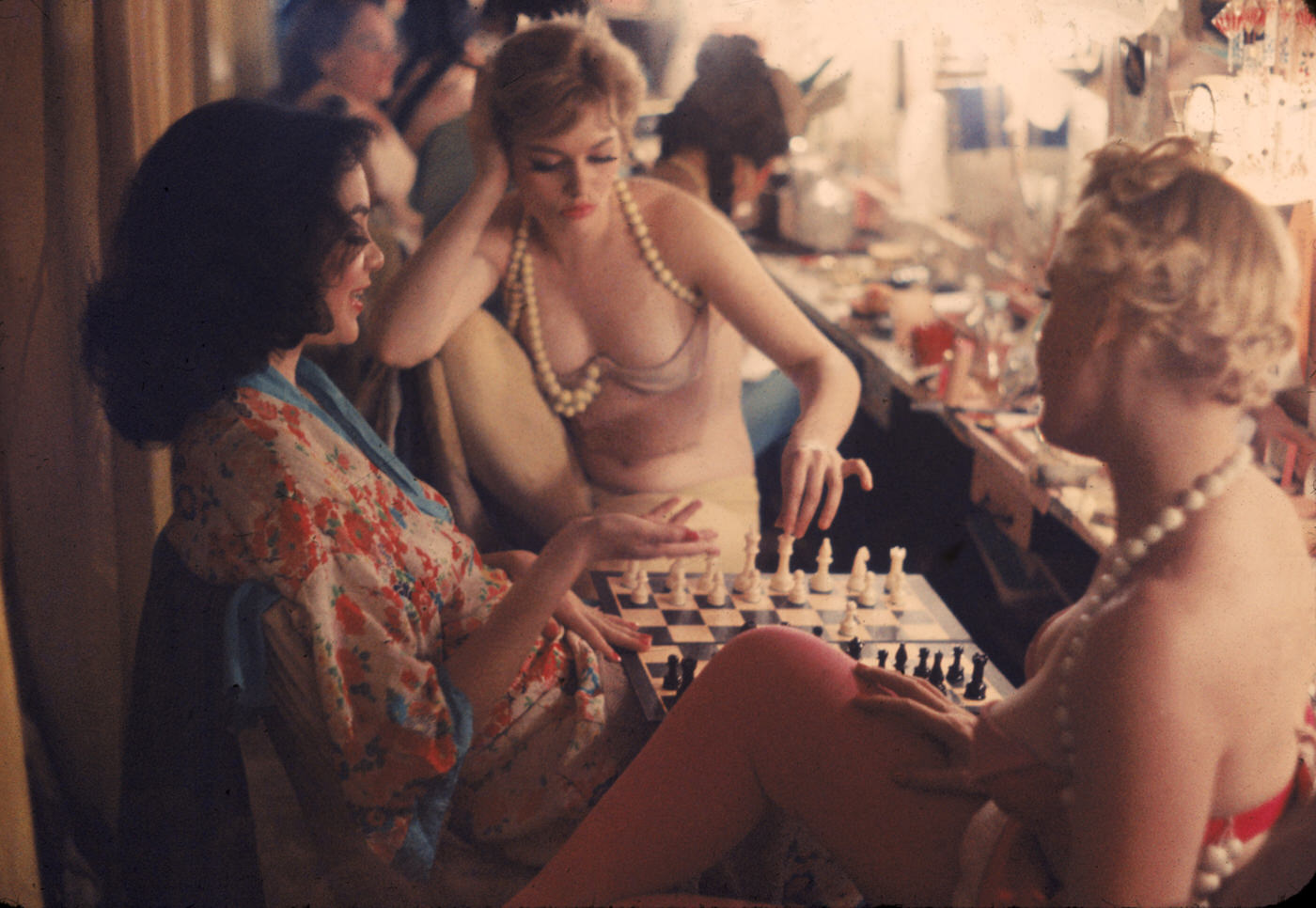
Backstage glamour rarely looks like a spotlight, and that’s what makes this 1958 New York nightclub scene so revealing. Three women gather around a chessboard in a crowded dressing-room corner, surrounded by the clutter of cosmetics, mirrors, and costume pieces that define the working world behind the curtain. The soft blur of movement in the background hints at a tight schedule—people coming and going, quick changes, and the constant hum of preparation.
Between the pearls, carefully styled hair, and stage-ready makeup, the photo holds a quieter kind of drama: downtime used to reset, flirt with strategy, or simply pass the minutes before the next cue. One performer leans in mid-move while another watches with a half-smile, suggesting camaraderie as much as competition. It’s an intimate reminder that showgirls weren’t just symbols of spectacle—they were professionals navigating long nights, shared spaces, and the small rituals that made the grind manageable.
For readers drawn to mid-century fashion and culture, the image offers a textured look at what “glitter and grit” actually meant in 1950s New York nightlife. The nightclub fantasy sold to audiences depended on unseen labor—rehearsals, upkeep, and constant presentation—yet it also created pockets of community in unlikely places. Here, a simple game becomes a snapshot of agency and personality, capturing the human moments that survived between entrances and applause.