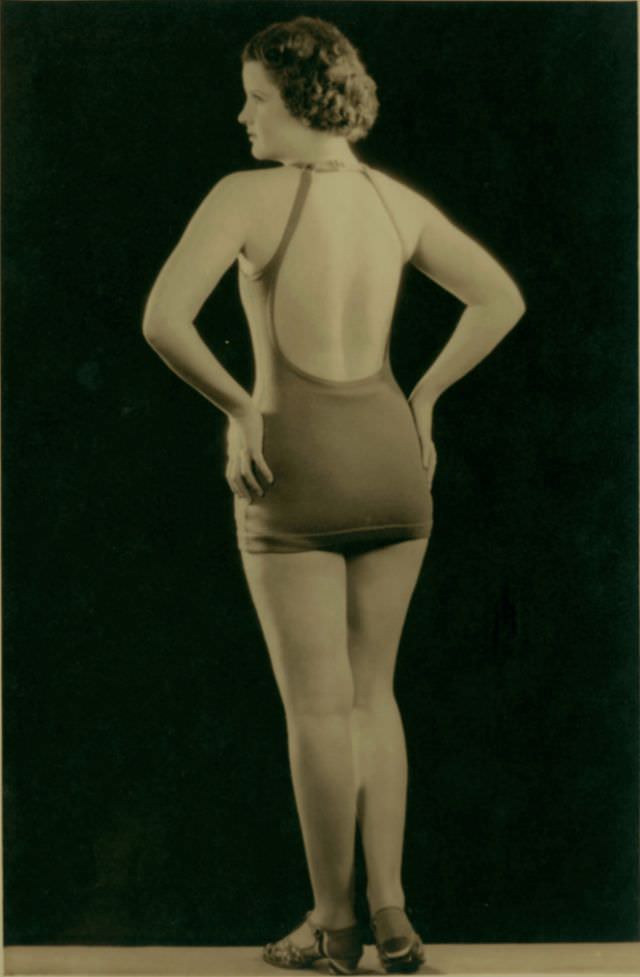
Poised in a studio-like darkness, a swimsuit model turns slightly away from the camera, hands set confidently at her hips as the light skims her shoulders and back. The one-piece suit is cut with an eye-catching open back and slim straps, a silhouette that reads unmistakably 1930s—sleek, athletic, and suggestive without being overt. Even the neat, softly waved bob and the understated footwear reinforce the era’s polished approach to leisure style.
Design details do much of the storytelling here: the fabric clings smoothly, emphasizing clean lines rather than busy ornament, while the higher leg and snug seat hint at the decade’s growing comfort with body-conscious fashion. That balance—modesty still present, but steadily receding—mirrors broader shifts in women’s swimwear as beaches, seaside holidays, and modern fitness culture gained prominence. Against the simple backdrop, the suit becomes both garment and statement, inviting the viewer to notice construction, fit, and attitude.
Tied to the title’s reference to Peter O’Sullivan, the image reads like a promotional or editorial fashion study, the kind used to sell an ideal of “summer” as much as the swimsuit itself. The controlled lighting and elegant pose elevate a practical bathing costume into a symbol of glamour, confidence, and modern femininity. For collectors of 1930s fashion photography and cultural history, it offers a vivid glimpse into how swimwear was marketed—sultry, streamlined, and made for the spotlight.