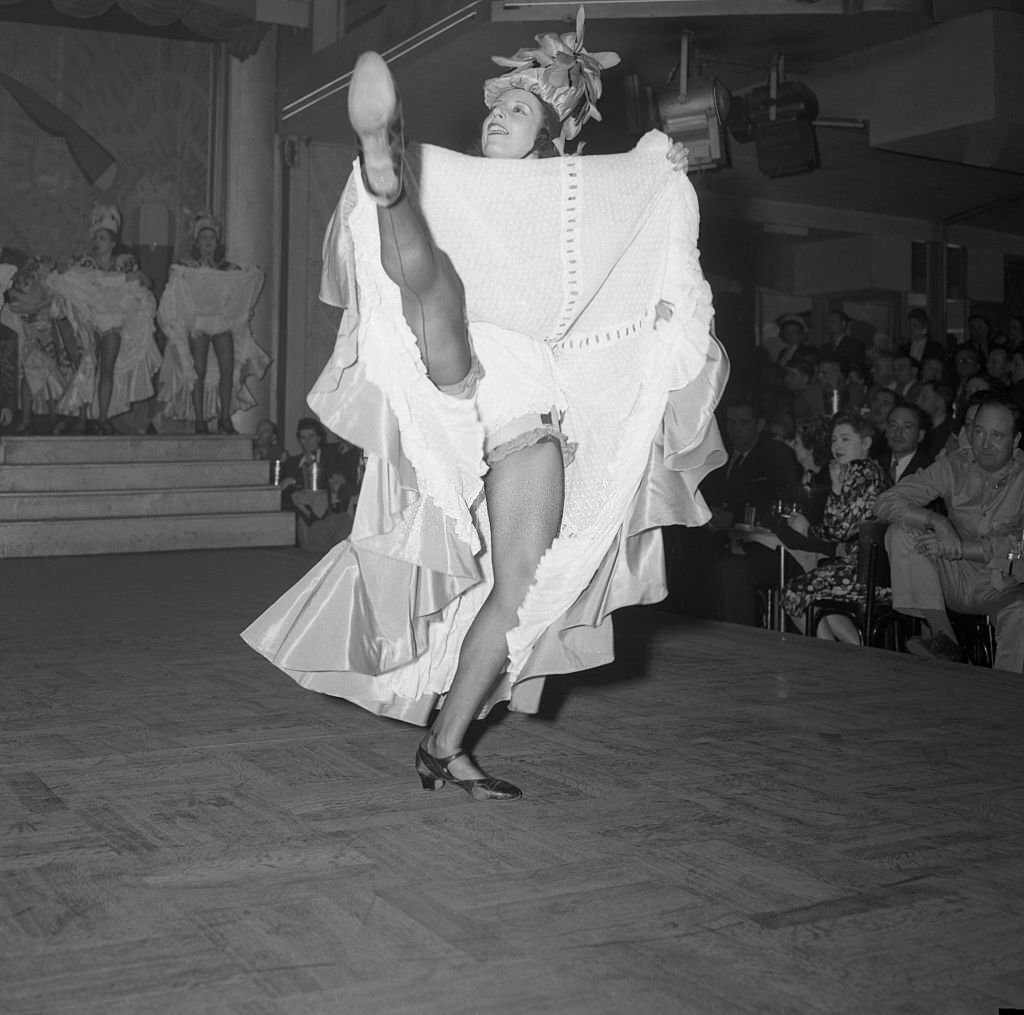
Mid-kick at the edge of the dance floor, a chorine snaps her leg skyward while sweeping up layers of ruffled petticoat, the bright fabric fanning like a banner around her. Dark stockings and sturdy dance shoes emphasize the athleticism behind the flourish, and the wide smile suggests a performer feeding on the room’s energy. In the background, a line of similarly dressed dancers waits on steps, poised to join the rhythm with synchronized lifts and skirts held high.
Along the right side of the frame, café-style tables and closely packed spectators turn the performance into a social event, not just a stage act. Men in suits and women in patterned dresses lean forward to watch, their faces lit by the spectacle, while overhead fixtures and the open interior hint at a bustling nightlife venue. The scene reads as classic Parisian cabaret culture—music, movement, and audience packed together in a shared moment of postwar diversion.
As the title suggests, the ever-popular Can-Can is presented here as a symbol of revival, with exuberance reclaiming public space after years of restraint. The image highlights the dance’s physically demanding technique—high kicks, balance, and rapid skirt work—alongside its carefully crafted costume design meant to exaggerate motion. For anyone searching the history of the Can-Can, Paris nightlife, or 20th-century fashion and entertainment, this photograph offers a vivid glimpse of how performance helped a city announce its return to pleasure and spectacle.