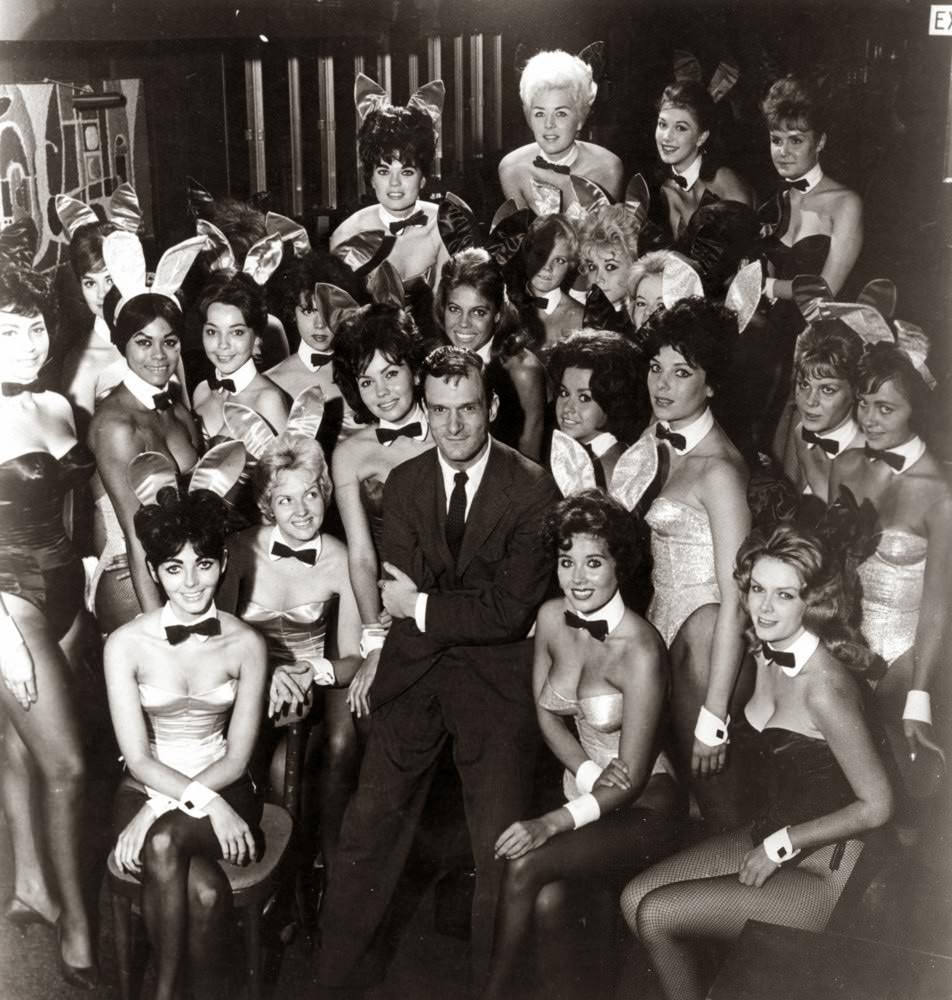
Clustered tightly around a suited Hugh Hefner, a crowd of Playboy Bunny hostesses turns a nightclub corridor into a stage set—ears cocked, bow ties straight, and smiles calibrated for the camera. The contrast is the point: his dark, conservative tailoring at the center, and the shimmering leotards, fishnets, and satin accents radiating outward in a choreographed ring. Even the cramped background and hard flash lighting feel telling, the kind of behind-the-scenes moment that still reads as deliberate publicity.
Every detail of the Bunny costume signals brand identity as much as fashion—corseted silhouettes, cuffs, and those instantly recognizable ears—designed to be seen across a room and remembered afterward. The variety of hairstyles and confident poses hints at the era’s evolving glamour, where show-business polish met mid-century nightlife. As a historical photo, it works like an advertisement you can study: uniformed femininity, carefully framed elegance, and the promise of an exclusive club experience.
Taken in the context of America’s chain of Playboy clubs, the scene reflects a period when pop culture, hospitality, and sexualized spectacle were packaged into a profitable nightlife economy. It’s an image that invites mixed readings today, balancing nostalgia for retro style with questions about labor, image-making, and the performance of “sophistication.” For readers exploring Playboy history, vintage fashion, or the cultural machinery of the 1960s-style leisure world, this photograph offers a vivid snapshot of how the Playboy Bunny became both employee and icon.