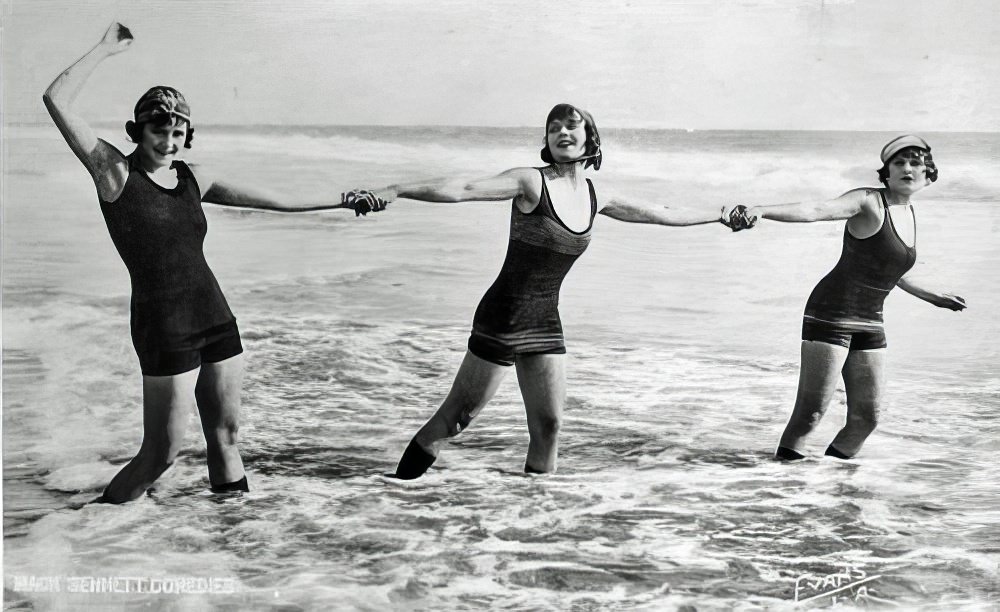
Wading into the surf, three women link hands in a playful line as waves curl around their calves, their faces turned toward the camera with the practiced ease of performers. Matching dark one-piece bathing suits—trim, sleeveless, and cut to allow movement—signal the new athletic silhouette emerging in the mid-1910s, while close-fitting swim caps keep hair neatly controlled for both water and lens. The open horizon and foaming water create a simple stage set, letting body language and costume do the storytelling.
Often associated with the Sennett Bathing Beauties, beach imagery like this helped early Hollywood package sunshine, youth, and comedy into a recognizable brand of glamour. The pose reads like a choreographed gag as much as a fashion moment: arms stretched, one figure lifting a hand in a jaunty gesture, another leaning into the pull of the tide, all balancing poise with spontaneity. In an era when moving pictures were turning performers into national sensations, such promotional photographs doubled as advertisements for a modern lifestyle.
Fashion and culture meet here at the shoreline, where swimwear was becoming less about heavy coverage and more about freedom, sport, and spectacle. The streamlined suits suggest shifting standards of modesty and an appetite for outdoor recreation, while the group arrangement hints at ensemble entertainment and the rise of the photogenic “bathing beauty” archetype. For historians of 1915 style and early film publicity, the scene captures how Hollywood glamour took shape not only on sets, but also in the bright, public theatre of the beach.