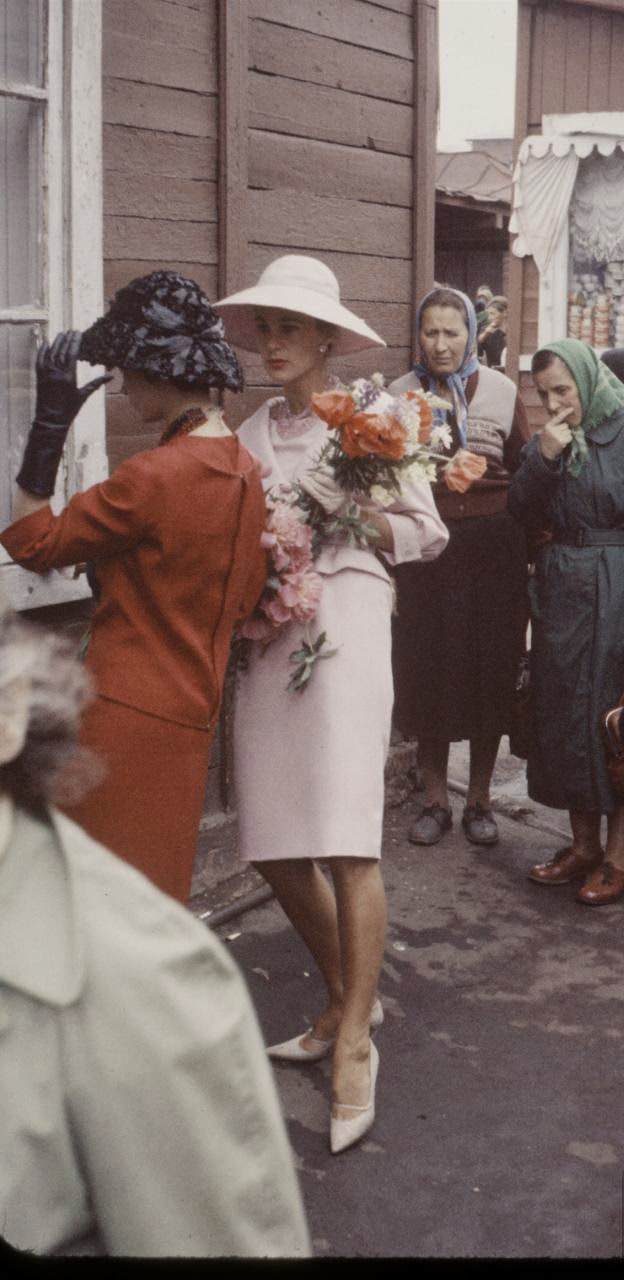
Silk gloves, sculpted hats, and a pale, impeccably tailored suit step into view like a scene from another world, the model’s bouquet adding a soft flourish to the sharp lines of couture. Against weathered wooden walls and a modest street stall, the contrast becomes the story: Parisian polish meeting the everyday textures of Soviet Moscow. Even without a runway, the styling reads unmistakably high-fashion—clean silhouettes, careful proportions, and an aura of controlled elegance.
Around the visitors, local women in headscarves lean in, watch, and weigh what they’re seeing, their expressions ranging from curiosity to guarded appraisal. The camera lingers on that quiet tension: admiration, skepticism, and surprise sharing the same sidewalk. In a place where clothing often signaled practicality and conformity, these outfits broadcast a different message—individuality, luxury, and the theatrical confidence of the Western fashion industry.
Fashion & culture collide here in a way that feels immediate, almost intimate, making the 1959 “Dior in Moscow” moment more than a headline. The photo hints at a brief opening in the Cold War’s everyday life, when style became a form of soft power and a street corner turned into an impromptu stage. For readers searching Soviet-era fashion history, Dior’s Soviet visit, or Moscow’s cultural shock of 1959, this image offers a vivid snapshot of how quickly a hemline and a hat could stir conversation.