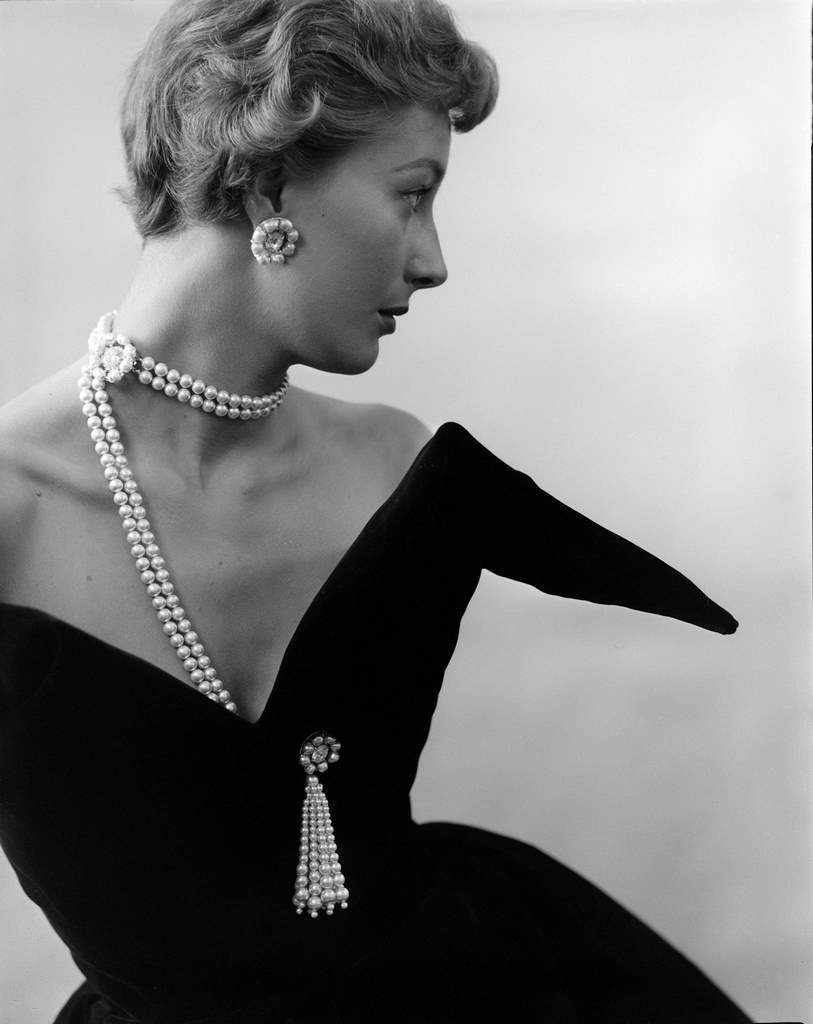
Profiled against a clean studio backdrop, a model turns her gaze to the right, letting the line of her neck and shoulder do as much storytelling as the jewelry itself. A multi-strand pearl necklace loops high at the collar and then drops in a longer sweep, catching the light bead by bead. Her coiffed, softly waved hair and sculptural floral earrings reinforce the polished elegance associated with postwar couture imagery.
The styling is deliberately pared back: a strapless dark gown provides a velvety field for the pearls, while long, dark gloves add dramatic contrast and a hint of theatre. One gloved arm lifts into the frame, creating a strong diagonal that echoes the necklace’s cascade and draws the eye to a tassel-like pearl ornament at the wrist. In black-and-white, the photograph leans on texture—lustrous spheres against matte fabric—showing how fashion photography could make simplicity feel luxurious.
Dated August 9, 1949, and linked to Jacques Fath, the portrait sits comfortably within the era’s fascination with refined glamour and impeccably composed silhouettes. It reads as both accessory study and mood piece, advertising the timeless appeal of pearls while celebrating the craftsmanship of high fashion design. For historians of fashion and culture, the image offers a vivid example of mid-century style: controlled, sensual, and built on the power of a single, unforgettable detail.