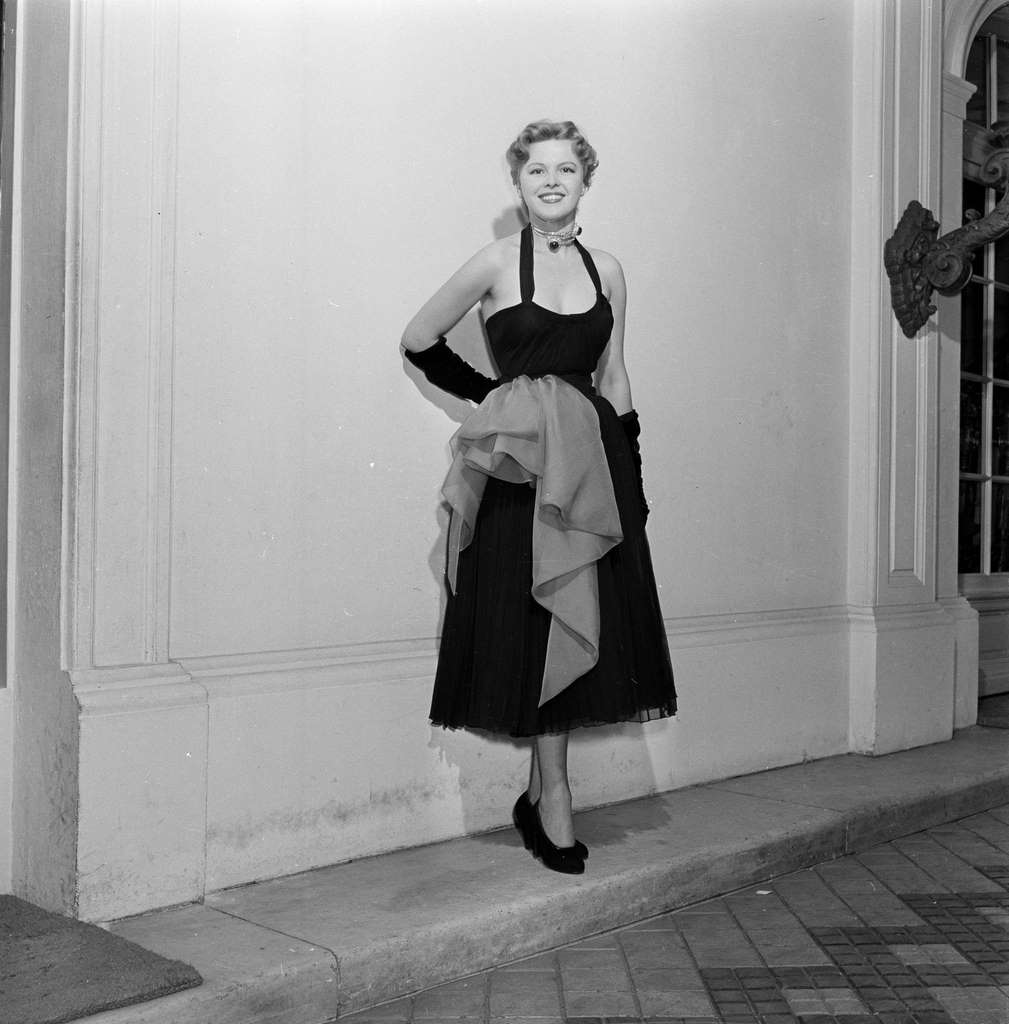
Poised against a bare wall and a grand doorway, a smiling model presents an evening look associated with the “Couturiers Associés” Autumn–Winter 1950/1951 collection. The dress is a dark, mid-calf silhouette with a halter neckline and a structured bodice, finished with long opera gloves and a sparkling choker that draws the eye to the face. A dramatic cascade of lighter fabric—like an oversized sash or bow—falls from the waist, adding movement and theatrical contrast.
Postwar couture often balanced restraint with spectacle, and this ensemble speaks that language fluently: clean lines, polished accessories, and a single statement flourish to signal luxury. The styling suggests the era’s renewed appetite for formal dressing, when cocktail and eveningwear regained social importance and fashion houses competed through impeccable construction and memorable details. Even in a simple photographic setting, the garment’s layered textures and controlled volume hint at atelier techniques designed to read beautifully in motion.
Linked by the title to a broader fashion collection and the world of mid-century couturiers, the photograph functions as both documentation and advertisement for high-end design in the early 1950s. The architectural background—moldings, threshold, and a glimpse of an interior beyond the glass—frames the look as something meant for elegant entrances and public display. For historians of fashion and culture, it’s a vivid snapshot of 1950s couture: confident femininity, formal glamour, and the careful choreography of presentation.