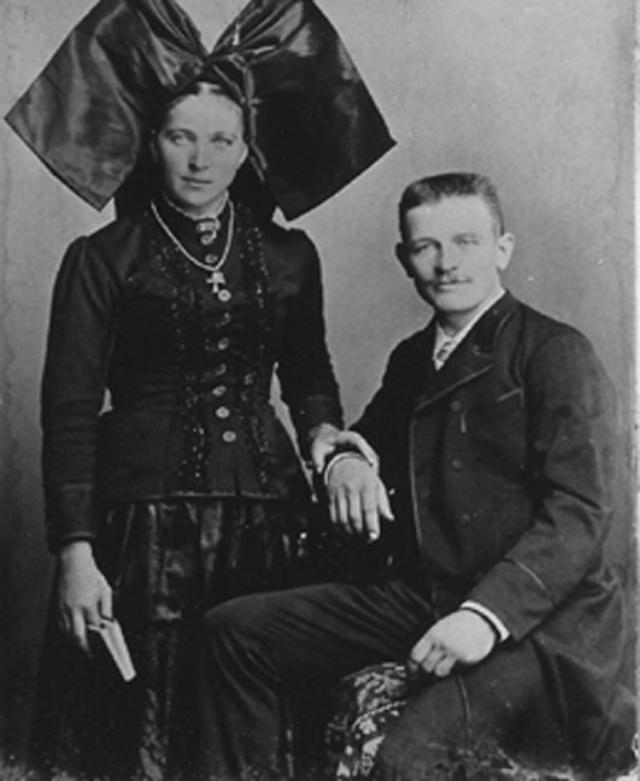
Poised beside a seated companion, an Alsatian woman faces the camera in formal traditional costume, her silhouette crowned by an unmistakable oversized bow headdress. The outfit is meticulously arranged: a dark fitted bodice fastened with a row of buttons, a long skirt with a subtle sheen, and layered necklaces that draw the eye to a prominent cross at her throat. The studio backdrop is plain, letting the texture of fabric, the crisp tailoring, and the striking headpiece carry the story.
To her right, the man’s neatly cut suit and composed posture reflect the era’s taste for careful presentation, suggesting a portrait made for family memory as much as for fashion. Their expressions are calm and direct, the kind of steady gaze common in early 20th-century portrait photography, when holding still was part of the ritual. Small details—jewelry, lapels, cuffs, and the controlled fall of the skirt—offer a rich record of everyday elegance in a borderland culture known for distinctive dress.
Alsace’s traditional attire, especially the dramatic headdress, has long served as a visual shorthand for regional identity, and images like this helped preserve that symbolism through decades of change. Beyond costume history, the photograph speaks to how people chose to be seen: dignified, well dressed, and rooted in custom while engaging with modern studio portraiture. For researchers and enthusiasts of European folk fashion, early 20th-century clothing, and cultural heritage, the scene provides a compelling window into Alsatian style and social life.