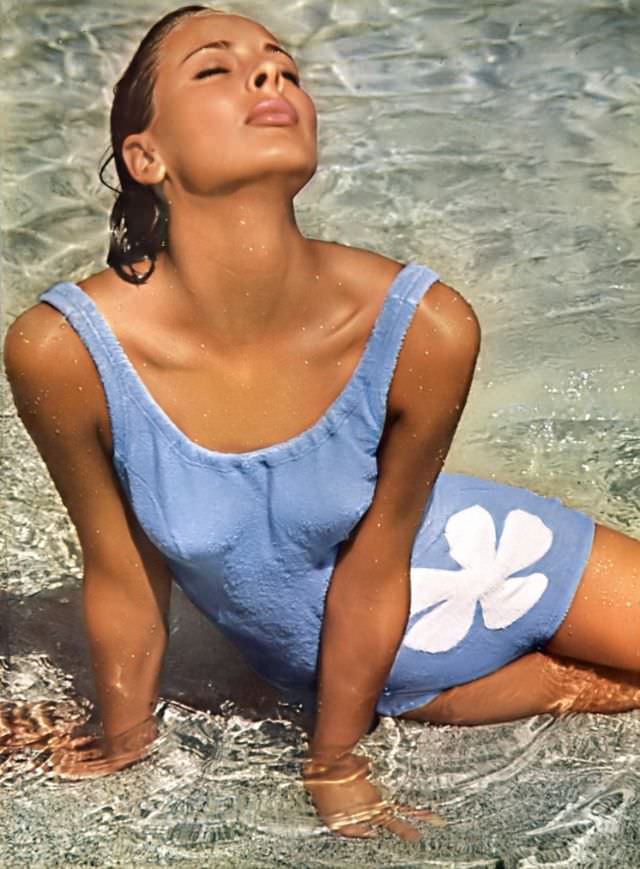
Sunlit surf glitters around Camilla Sparv as she kneels at the water’s edge at Wanda Beach, her head tilted back in a languid, almost sculptural pose. The blue French bathing suit—simple in cut yet striking in color—reads vividly against the pale foam, with a bold white floral motif at the hip adding a playful graphic note. Wet hair slicked away from her face and the sheen of seawater on skin heighten the sense of summer heat and salt air, turning a fashion moment into something tactile and immediate.
Rather than relying on studio polish, the scene leans into the beach’s natural textures: rippled shallows, scattered highlights, and the soft blur of moving water. The composition brings the viewer close, emphasizing line and posture—shoulders, collarbones, and the curve of the suit—while keeping the ocean as both backdrop and active element. It’s an image that sells swimwear through mood as much as design, balancing elegance with a frank, modern sensuality.
Set in Australia in June 1964, the photograph belongs to a period when fashion photography increasingly sought freedom outdoors, letting wind, water, and bright daylight do the storytelling. The look evokes mid-century resort glamour—confident, pared-down, and camera-aware—while the saturated color palette anchors it firmly in the 1960s visual language. For searches tied to Helmut Newton’s early fashion work, 1960s swimwear, or Wanda Beach style history, this portrait stands as a vivid intersection of fashion, culture, and coastal modernity.