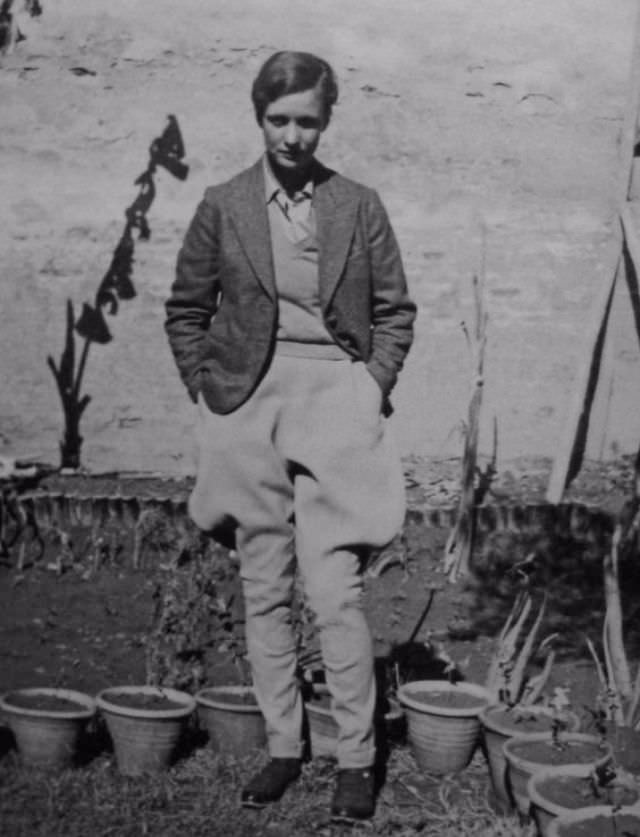
Hands in pockets and shoulders set, the young woman in this 1930s-era scene wears a tailored jacket over a neat shirt and tie, the silhouette finished with roomy, practical trousers. The effect is crisp and self-possessed rather than decorative, leaning into the kind of tomboy style that borrowed from menswear without losing its own modern confidence. Even the simple garden backdrop and plain wall throw the focus onto cut, proportion, and attitude.
Tomboy fashion in the 1930s often lived in these small, telling choices: a structured blazer, a collar worn firmly at the neck, and clothing built for movement instead of fuss. The outfit reads as both everyday and quietly defiant, suggesting a woman making space for herself in a decade that still policed what “proper” femininity should look like. For readers interested in women’s fashion history, this is a snapshot of how rebellion could be stitched into ordinary clothes.
Against the softness of plants and flowerpots, the sharp lines of the suit-like styling stand out, highlighting the era’s tension between tradition and change in fashion and culture. The tomboy look wasn’t merely a costume; it was a statement about work, leisure, and identity—how a woman might choose comfort, utility, and a streamlined profile. Browse this post for a closer look at 1930s womenswear, and the subtle ways style signaled independence long before it became mainstream.