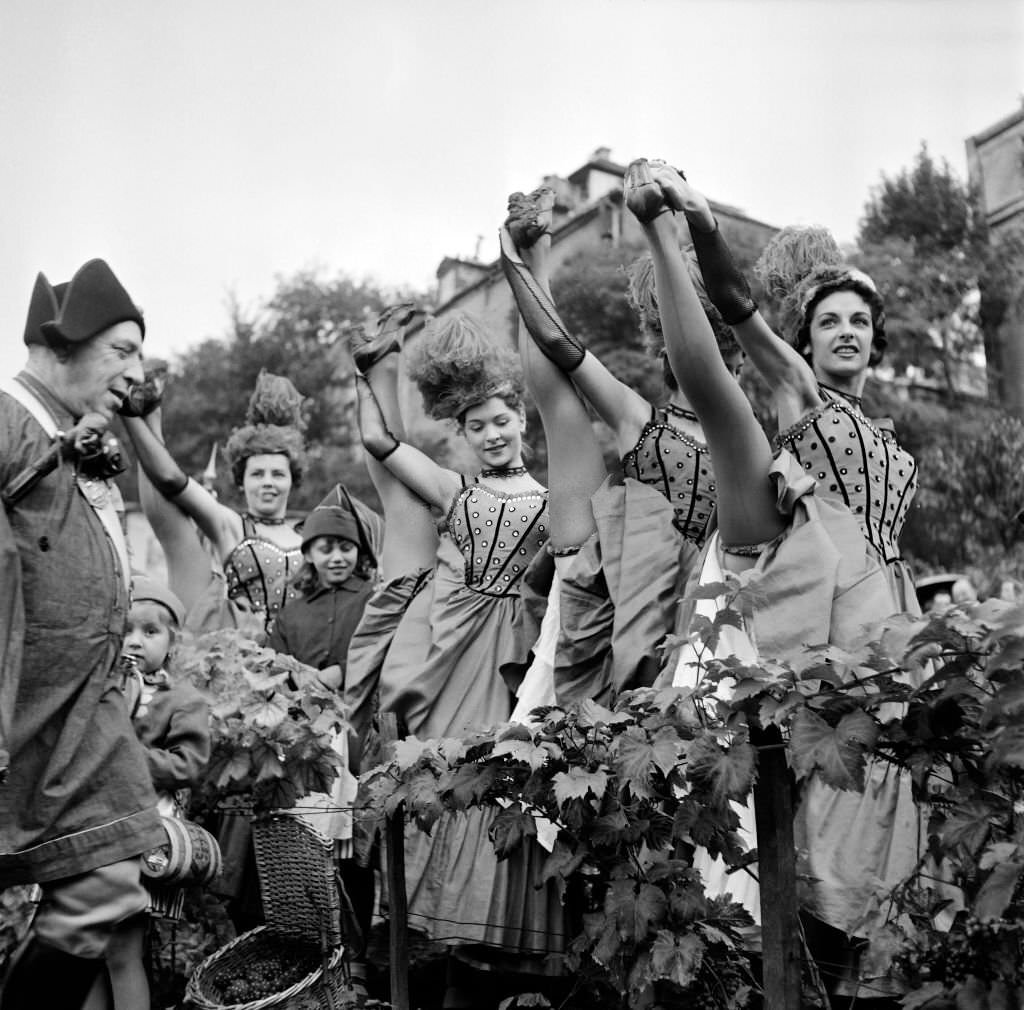
On a leafy outdoor platform, a line of young women launches into the Can-Can’s signature high kicks, skirts flaring and torsos held taut with practiced poise. Their stage costumes—structured bodices dotted with trim, puffed sleeves, and dramatic headpieces—turn the dance into a moving pattern of texture and rhythm. Faces lifted toward the crowd, they project the spirited confidence that made this high-energy routine a lasting emblem of popular entertainment.
At the edge of the scene, spectators press in close, including children and an older onlooker in a distinctive hat, all drawn toward the spectacle unfolding just a few feet away. The dancers’ raised legs and pointed shoes dominate the frame, emphasizing the athleticism behind the glamour and the precise timing required to keep the chorus line unified. Behind them, rooftops and trees anchor the performance in everyday city life, suggesting a public celebration rather than a closed theatre setting.
That mix of street-level immediacy and carefully curated costume speaks to the Can-Can’s place in 20th-century fashion and culture, where daring movement and showy dress worked together to court attention. The photograph doubles as a visual record of entertainment history, capturing how performance troupes brought spectacle to festivals and gatherings while audiences watched from arm’s length. For anyone searching Can-Can dance history, vintage dancers, or classic chorus-line style, the image offers a lively snapshot of a famed routine at full flourish.