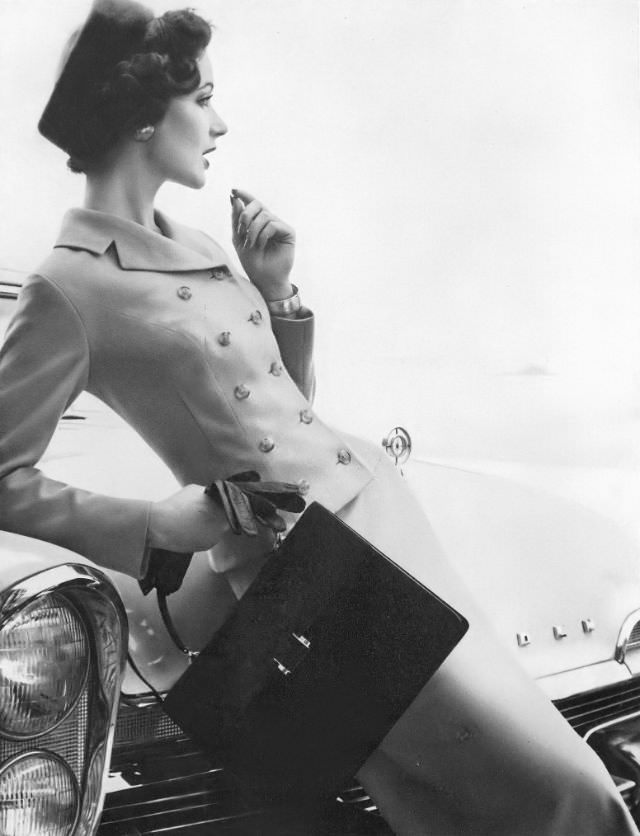
Poised in profile beside the gleaming front end of a late‑1950s automobile, Betsy Pickering wears a brown wool‑Orlon suit by Handmacher, her posture all angles and assurance. The jacket’s sculpted collar and double‑breasted line of buttons emphasize the era’s clean, tailored silhouette, while the matching skirt keeps the look sleek and urbane. A dark, structured handbag and close-fitting gloves add the crisp finishing notes of mid-century polish.
Her coiffed hair is tucked beneath a compact hat, and the small earrings and bracelet read as controlled sparkle rather than excess—exactly the kind of restrained glamour prized in 1957 fashion photography. The styling suggests a woman on the move, caught between errands and engagements, with the car’s chrome and headlamp acting like a spotlight for couture-level daywear. Even without a visible street scene, the composition evokes postwar prosperity and the growing romance between modern femininity, travel, and consumer design.
Handmacher’s name anchors the image in American fashion history, when quality tailoring and practical fabrics like Orlon promised elegance that could keep pace with real life. The photograph’s high-contrast lighting and generous negative space heighten the editorial mood, making the suit’s lines and the model’s profile the true architecture of the frame. As an artifact of fashion and culture, it reads like a quiet manifesto for 1950s style—confident, streamlined, and ready for the next destination.