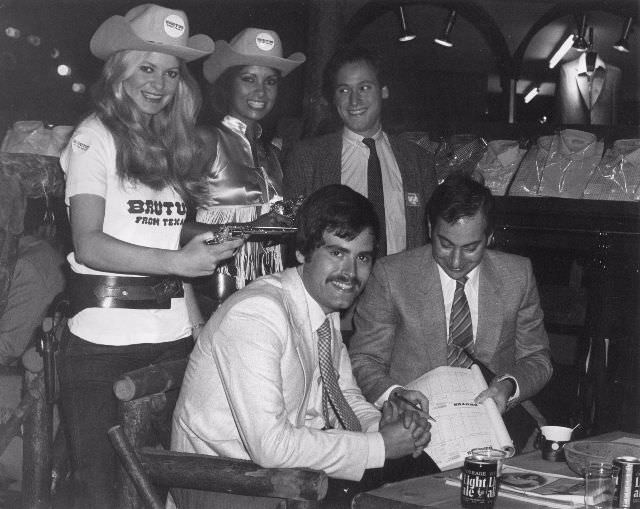
Under the glow of nightclub-style lighting, a small group gathers around a table where paperwork, a pen, and drink cans suggest a signing, promotion, or industry meet-up. Two women in matching cowboy hats and glossy outfits lean in with practiced smiles, one wearing a fitted T‑shirt emblazoned with “BRUTUS” and “from Texas,” an eye-catching clash of Americana branding against a distinctly British social scene. The mix of posed cheer and candid concentration gives the moment a lively, behind-the-scenes feel rather than a formal studio portrait.
Across the table, men in suits and ties anchor the image in the era’s smart tailoring, with one seated figure focused on a document while another looks up toward the camera. Texture and silhouette do much of the storytelling: wide lapels, patterned ties, and thick hairlines sit alongside the bold costume styling of the promotional hosts, hinting at how 1960s and 70s fashion freely borrowed from stage, street, and marketing. Even without a clear venue name, the background’s reflective surfaces and spotlights evoke the world of nightlife, retail launches, and the social circuits that helped trends travel.
Brutus Fashion, as framed by the title’s “photographic journey,” comes through here as more than clothing—it’s culture in motion, where branding, entertainment, and menswear intersect. The image reads like a snapshot of British style’s shifting identity in the late twentieth century: sharp suits meeting spectacle, everyday business meeting performance, and fashion functioning as a social passport. For anyone searching British 1960s and 1970s style inspiration, this scene captures the era’s confidence in mixing polished tradition with attention-grabbing flair.