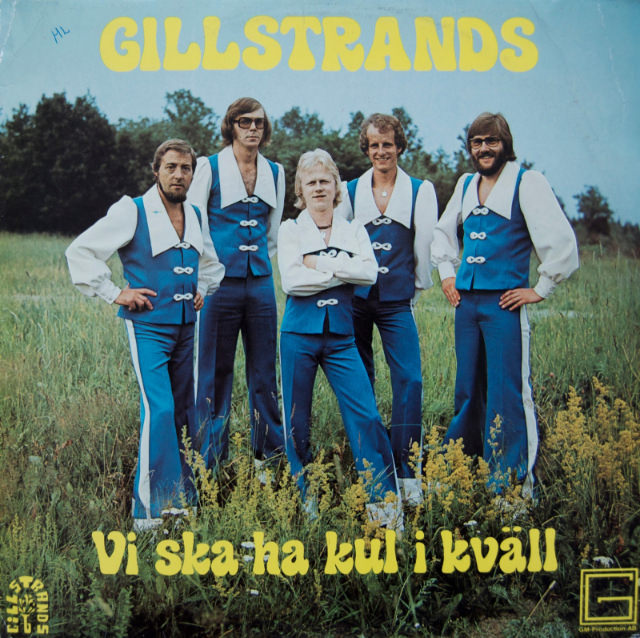
Against a summer field of tall grass and yellow wildflowers, five Swedish men pose with the easy confidence of a band selling more than just songs. The album cover reads “GILLSTRANDS” across the top, with the playful promise “vi ska ha kul i kväll” along the bottom, framing the group as entertainers ready to turn an ordinary evening into an event. Their relaxed stances—hands on hips, arms folded, shoulders squared—make the outdoor setting feel like a stage without walls.
Matching outfits do most of the talking: vivid blue vests and flared trousers paired with crisp white shirts, fastened with decorative clasps that catch the light. The styling lands squarely in the era of bold silhouettes, when coordinated menswear leaned into showmanship and a touch of theatrical flair. Long hair, sideburns, and neatly kept beards add to the period look, reinforcing how closely music marketing and fashion identity were intertwined.
What lingers is the contrast between countryside calm and the electrified wardrobe, a visual shorthand that would have stood out in record-shop bins. Swedish vintage album covers like this one often balanced approachability with spectacle, inviting listeners to imagine camaraderie, dance floors, and sing-along choruses. For anyone searching fashion and culture history through popular music imagery, the cover offers a bright snapshot of how daring color, tailoring, and persona worked together to sell a sound.