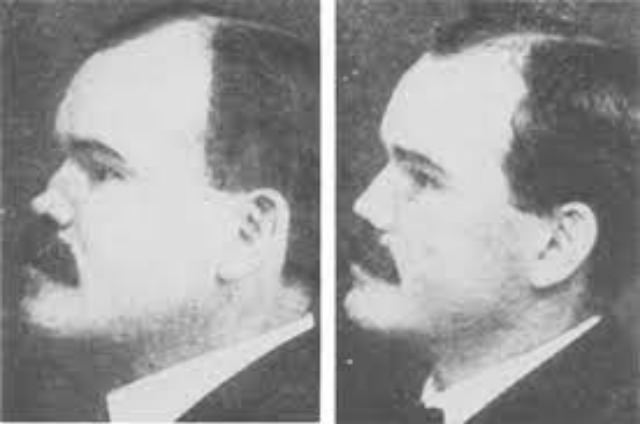
Side-by-side profile views of the same man invite a direct comparison: on the left, a fuller, more prominent nose; on the right, a slimmer bridge and a subtly revised tip. The pairing reads like an early “before and after” plate, the kind used by surgeons and magazines to make change visible at a glance. Even in this grainy reproduction, the emphasis is unmistakable—attention is fixed on the nose line, the angle of the bridge, and the way facial balance shifts with a few millimeters of alteration.
During the 1920s and 1930s, rhinoplasty moved into public conversation as modern beauty culture expanded through film, advertising, and fashion pages. A profile was more than a medical concern; it became a social signifier, shaped by prevailing ideals of refinement and symmetry. Images like this sat at the crossroads of medicine and style, offering a clinical-looking proof that a “new nose” could be planned, measured, and presented as an improvement.
What lingers is how matter-of-fact the transformation is made to seem, reducing a complex procedure to two calm portraits and a cleaner silhouette. Early cosmetic surgery relied on photographs to sell credibility—evidence that technique could deliver discreet results without obvious disruption to one’s appearance. For anyone tracing rhinoplasty history, these paired profiles are a window into an era when self-fashioning, modernity, and surgical innovation increasingly belonged to the same conversation.