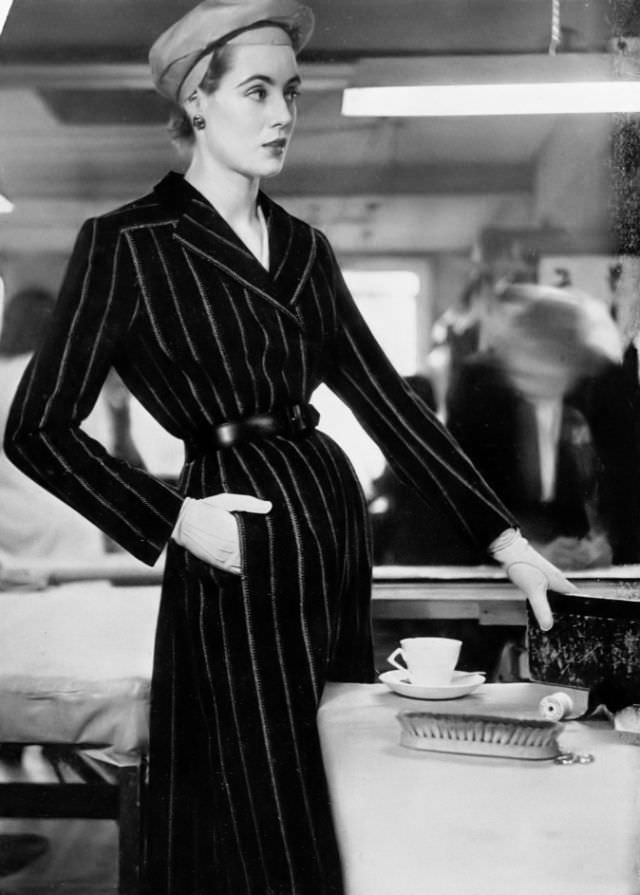
Poised with one hand tucked into a pocket and the other resting along a worktable, Pat O’Reilly models a sharply tailored coat that reads as pure early-1950s confidence. The silhouette is long and lean, cinched decisively at the waist with a wide belt, while the subtle vertical striping elongates the figure and emphasizes the garment’s clean lines. A fitted hat, gloves, and small earrings complete a polished look that feels both practical and unmistakably editorial.
Digby Morton’s design speaks in the language of British couture tailoring: structured shoulders, a precise lapel, and a disciplined balance between elegance and utility. Though the post title notes a gray tweed, the photograph’s tonal range highlights texture and pattern rather than color, inviting the viewer to imagine the weight and hand of the fabric. The styling evokes Harper’s Bazaar UK’s refined approach to fashion photography, where craftsmanship and silhouette are given center stage.
Behind the model, the blurred interior suggests a working environment—tables, surfaces, and indistinct figures that hint at the labor of making clothes rather than just wearing them. That contrast between the serene, controlled pose and the busy backdrop adds a cultural layer to the image, connecting postwar fashion to the ateliers and studios that shaped it. As a March 1951 magazine moment, it captures a period when womenswear leaned toward tailored authority, presenting the tweed coat as a modern uniform for city life and the season ahead.