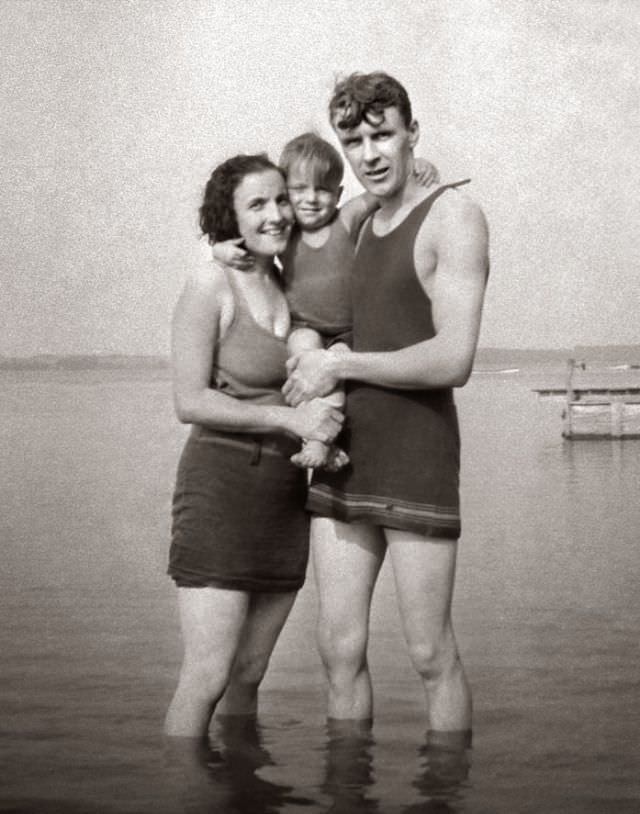
Sunlit water and a calm shoreline set the stage for an intimate beach portrait: two adults stand ankle-deep in the shallows, holding a small child between them. Their swimsuits—sleek, dark, and modest by later standards—hint at the 1930s shift toward streamlined silhouettes while still prioritizing coverage and practicality. The relaxed smiles and wind-tossed hair add a candid warmth that feels less like posed glamour and more like an everyday holiday memory.
The woman’s one-piece is paired with a skirted bottom, a popular solution in interwar swimwear that balanced freedom of movement with contemporary expectations of decorum. Beside her, the man wears a tank-style suit with a short, skirt-like extension, emphasizing a broad-shouldered athletic look that was increasingly marketed as modern and healthy. Even without bold patterns or accessories, the cut and fit speak to an era when elegance was defined through clean lines and confident simplicity.
Behind them, open water stretches toward the horizon and a small dock or boat structure sits off to the right, grounding the scene in leisurely seaside culture. Images like this help trace the evolution of swimwear as both fashion and social code: garments designed for bathing, yet shaped by ideals of respectability, sport, and family life. For anyone exploring vintage beach fashion, this photograph captures how 1930s swimwear quietly bridged tradition and modernity—practical, flattering, and unmistakably of its time.