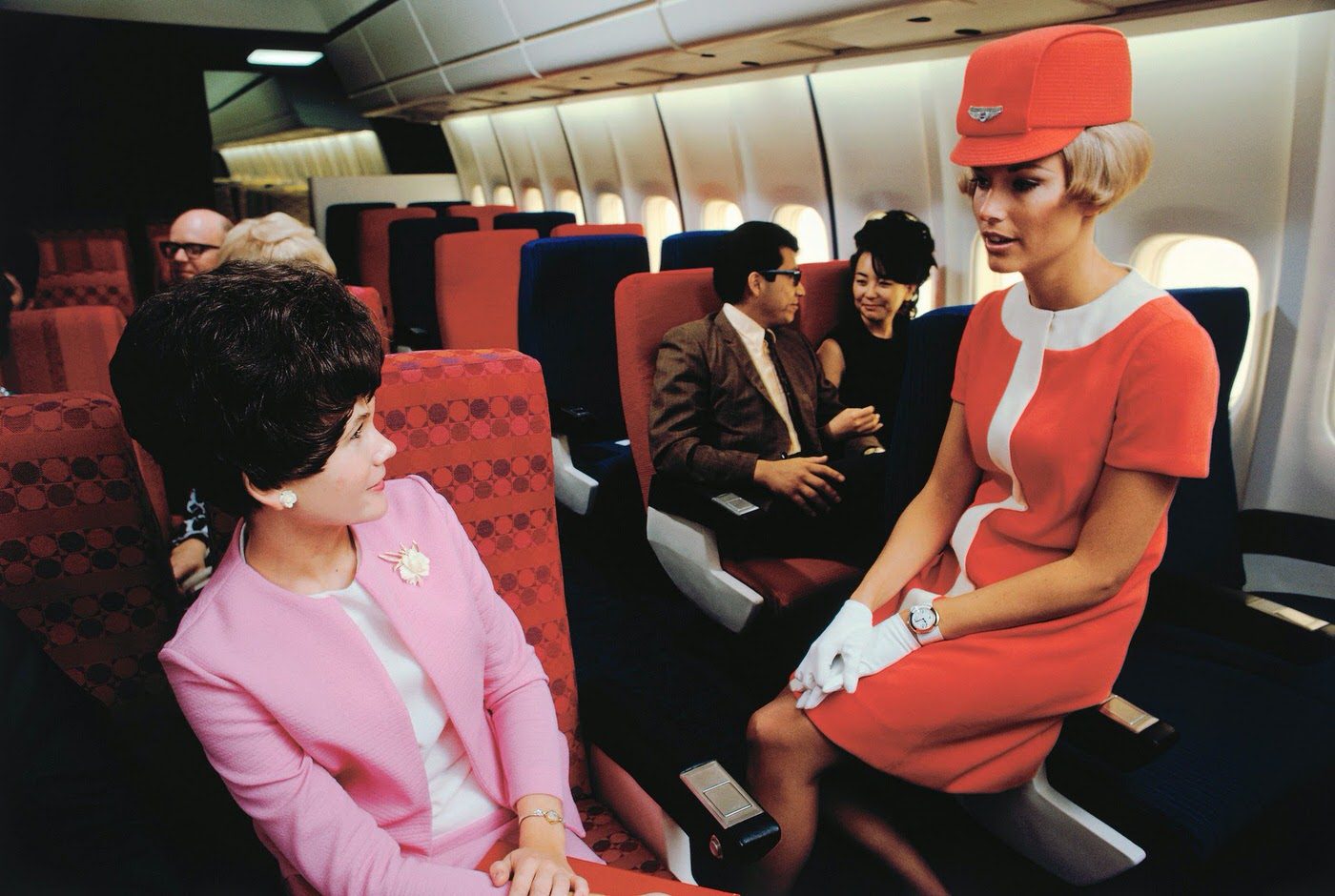
Warm cabin lighting and a tidy row of oval windows set the stage for a poised United Airlines stewardess as she leans in to speak with a seated passenger inside a simulated Douglas DC-10 cabin. The scene is carefully composed: bright, modern upholstery, generous seatbacks, and a clean ceiling line that signals the jet-age promise of comfort and efficiency. Even in a training or promotional setting, the moment feels lived-in—part conversation, part service ritual—capturing how airlines sold the experience of flying as much as the flight itself.
Fashion carries much of the story here, bridging the “Golden Age” polish with the Mod-era confidence. The stewardess’s bold, color-blocked uniform, crisp hat, and white gloves read like a corporate signature—instantly recognizable, impeccably controlled, and designed to look sharp under cabin lights. Across the aisle, passengers’ tailored outfits echo the period’s expectation that air travel was an occasion, reinforcing how style and status once traveled hand in hand at cruising altitude.
Beyond the uniforms and seating, the photograph hints at a broader cultural shift in commercial aviation during the late 1960s, when wide-body ambitions and curated onboard hospitality helped define airline identity. A “simulated cabin” underscores the behind-the-scenes work that shaped public perception: training, marketing, and image-making all built into one glossy tableau. For readers interested in flight attendant fashion, airline history, or the design language of mid-century travel, this DC-10-era snapshot offers a vivid window into how modern air travel learned to look—and feel—effortless.