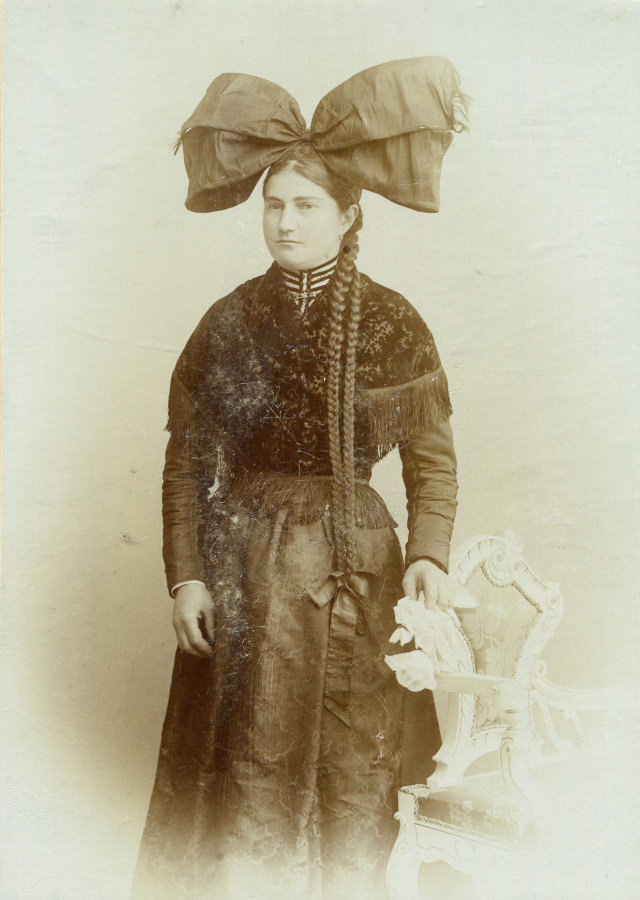
Poised against a plain studio backdrop, an Alsatian woman stands in formal traditional dress, her expression calm and direct as she faces the camera. The unmistakable oversized bow headdress—arched like wings and tied high above her head—dominates the composition, signaling regional identity as clearly as any written caption could. A long braid falls over her shoulder, adding to the carefully arranged presentation typical of early 20th-century portrait photography.
Rich textures emerge in the clothing: a dark, patterned bodice with fringed detailing, a striped high collar, and a full skirt with a neat apron-like front panel. Subtle tonal shifts suggest heavier fabrics meant for durability as well as ceremony, while the structured silhouette speaks to local fashion conventions passed down through generations. At her side sits an ornate chair with light upholstery, a studio prop that lends a touch of refinement and frames the figure’s stance.
Beyond its elegance, the portrait reads as a document of cultural continuity at a time when photography was becoming a popular way to preserve family history and regional costume. The headdress and embroidered elements reflect Alsace’s distinctive folk tradition and the pride attached to wearing it, whether for festivals, community gatherings, or commemorative portraits. For anyone searching early 20th-century Alsatian costume, women’s traditional dress, or European folk fashion history, the image offers a striking, intimate record of identity expressed through clothing.