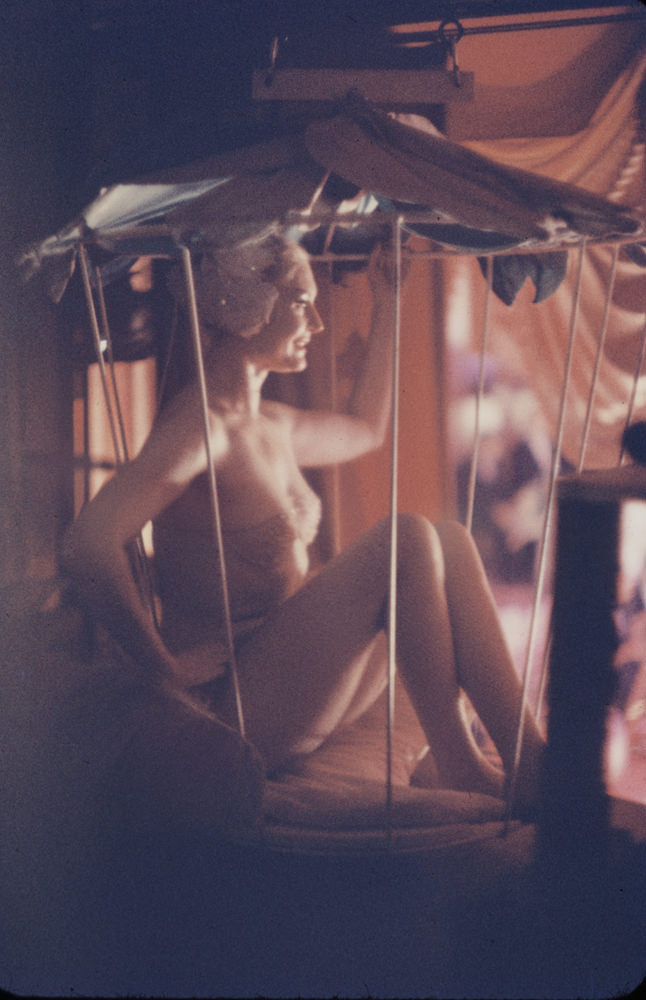
Warm stage light spills across a backstage corner, catching the outline of a dancer posed in a suspended rig that reads like part prop, part costume, part constraint. The soft focus and saturated color give the scene a dreamlike glow, yet the practical details—ropes, framing, and cramped space—hint at the machinery behind a New York nightclub spectacle. It’s an intimate glimpse of showbiz labor, where illusion depends on hardware as much as glamour.
1958 nightclub culture sold audiences feathers, sequins, and effortless smiles, but moments like this suggest the hours spent waiting, adjusting, and holding still until the cue arrives. The performer’s profile is calm and composed, even as the setup around her looks demanding, reminding us that showgirls were athletes of poise as well as icons of fashion. In the hush between numbers, the human cost of “glitter” becomes visible: posture, patience, and the constant negotiation between comfort and presentation.
Inside the Glitter and Grit looks past the marquee fantasy to the real working environment of mid-century New York nightlife—where choreography, stagecraft, and style collided in tight quarters. For readers interested in fashion and culture history, this photo invites questions about backstage routines, costumes and bodywork, and the expectations placed on women in entertainment at the height of the nightclub era. The result is a story that’s as much about labor and resilience as it is about sparkle.