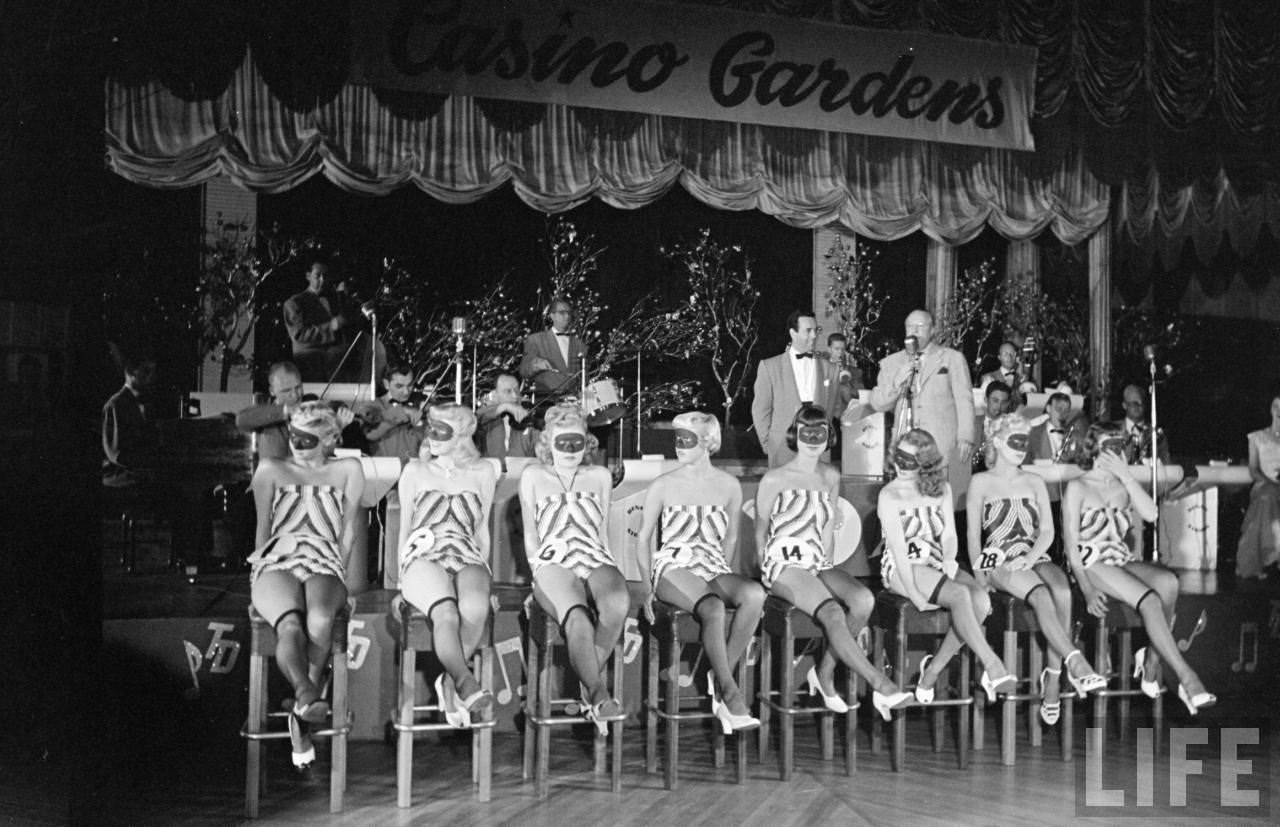
Under the draped proscenium of the Casino Gardens stage, a row of contestants sits in careful formation, each in a matching striped outfit, high heels, and an eye mask that turns individual faces into a single, stylized chorus line. Numbered tags pinned at the hip reduce the pageantry to a tally, while the women’s crossed ankles and pointed toes make it clear what the judges and the audience have come to appraise. The composition is part nightclub revue and part carnival novelty—an unmistakable slice of midcentury Los Angeles fashion culture.
Behind them, a live band and tuxedoed emcees frame the event as respectable entertainment, complete with microphones, music stands, and the polished glow of a ballroom floor. The theatrical backdrop and playful musical-note décor add to the sense that this “beautiful legs” competition is as much about showmanship as measurement. Even without hearing the room, the photograph suggests the rhythm of the evening: announcements from the stage, a swell from the orchestra, and the crowd’s attention fixed on a very specific ideal.
Titled as a look back at 1949, the scene speaks to postwar America’s appetite for glamour, consumer style, and camera-ready spectacle, when pageants and promotional contests blurred into nightlife. The masks hint at anonymity and objectification—legs judged apart from personality—while the uniform costumes signal how tightly femininity was packaged for public viewing. For modern viewers and historians alike, it’s a vivid artifact of how beauty standards, entertainment, and marketing intertwined in Los Angeles, leaving behind an image that is both dazzling and disquieting in what it chooses to celebrate.