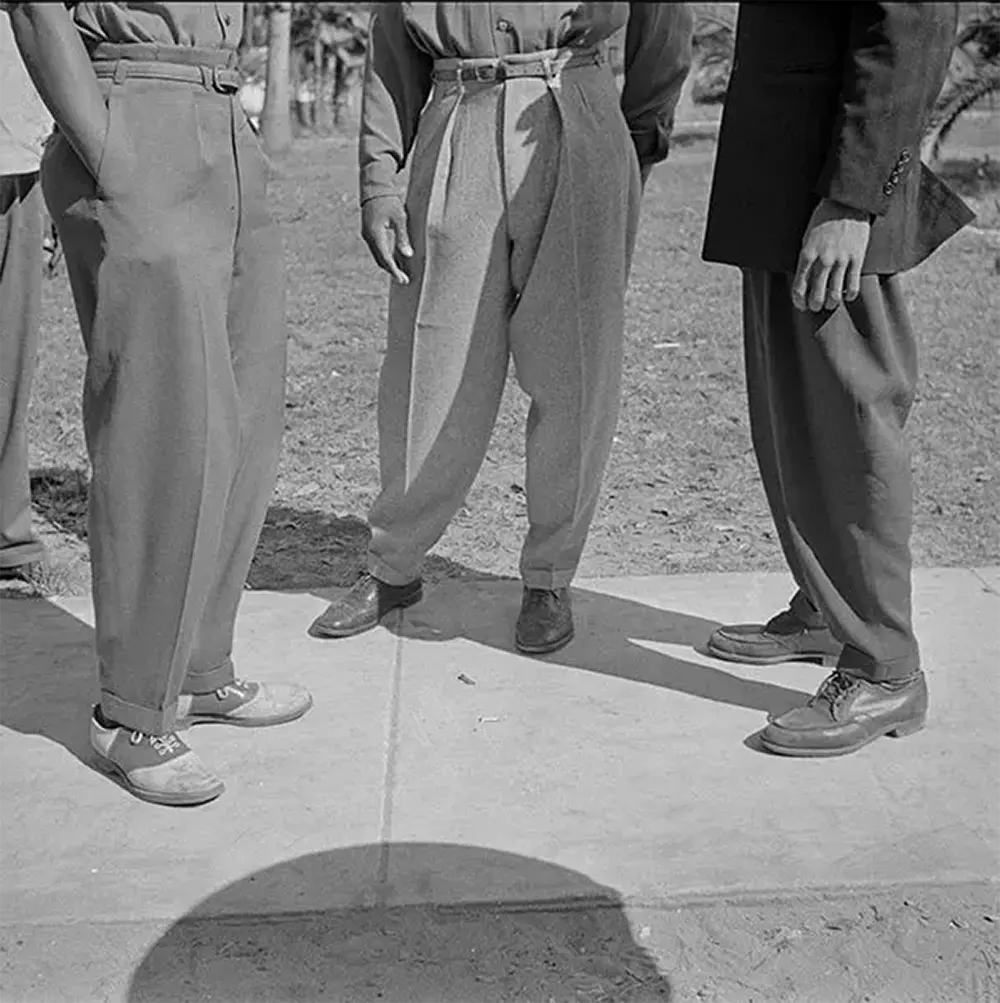
Three young men stand in a loose sidewalk circle, the camera cropping them at the torso so the real subject becomes pure style: the architecture of zoot suit trousers. High waists cinched with belts, deep pleats, and roomy thighs fall into legs that narrow sharply at the ankle, ending in polished lace-up shoes. The framing turns fabric into evidence, letting you read the cut, drape, and swagger of the look without distraction.
Daytona Beach, Florida forms a plain, sunlit backdrop—grass beyond the pavement, long shadows on the concrete—suggesting a casual street moment rather than a posed studio fashion shot. Gordon Parks’ eye lingers where movement would be most visible: cuffs hovering above the shoes, seams and creases catching the light, hands relaxed at the sides. Even without faces, the stance and spacing imply conversation, camaraderie, and a shared pride in being seen.
Zoot suit fashion carried meaning far beyond cloth, and images like this help explain why the style became a flashpoint in American cultural history. The exaggerated silhouette—wide and tapered, designed to swing and stride—signaled youth identity, modern music scenes, and defiance of expectations, especially during an era when conformity was demanded. For researchers and readers searching “zoot suit pants,” “zoot suit style,” or “Gordon Parks Daytona Beach,” this photograph offers a crisp, grounded glimpse of how a trend looked on the street and why it mattered.