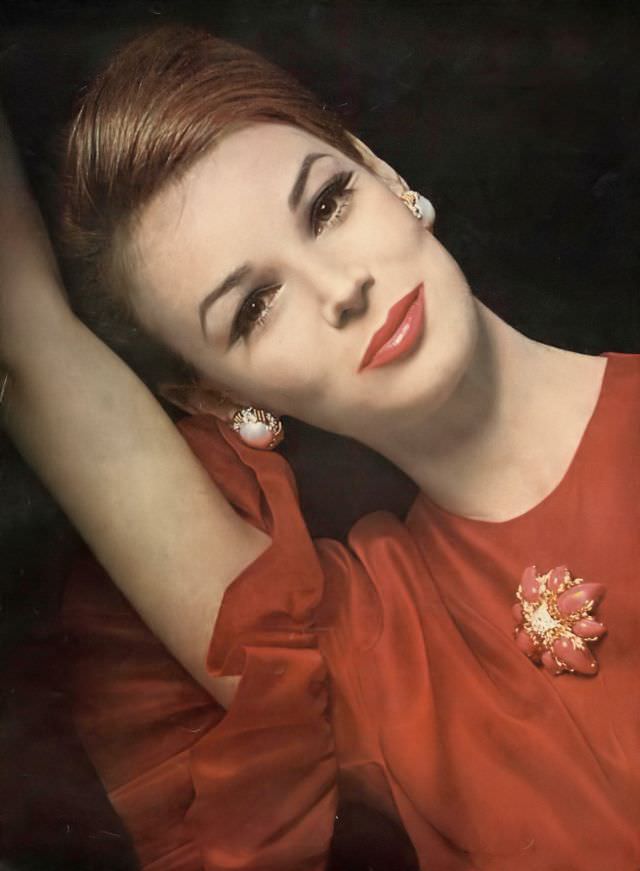
Anne de Zogheb appears in a poised, close-up beauty portrait that leans into the rich drama of early-1960s fashion editorial styling. Her head tilts softly against an upraised arm, drawing the eye to sculpted brows, precise eyeliner, and a luminous complexion that reads as carefully lit and meticulously finished for magazine reproduction. The overall mood is intimate and controlled, a classic Vogue approach that turns a single face into a full narrative of elegance.
Cranberry tones dominate the composition, from the ruffled blouse to the saturated lipstick that echoes its depth. The blouse is described as doubled silk organza over a China silk lining, a construction that suggests both volume and translucence—perfect for catching light and creating that signature couture flutter at the sleeve. Jewelry punctuates the look with restrained sparkle, while a floral brooch adds a small, ornamental flourish that reinforces the period’s love of polished, ladylike detail.
Published in Vogue in July 1962, the styling also nods to the era’s tight relationship between fashion houses, luxury department stores, and cosmetics branding. Sarff-Zumpano’s made-to-order design at Henri Bendel situates the garment in an aspirational retail world, while Coty’s Pure Cranberry lipstick ties the editorial story to a specific shade name meant to be remembered and purchased. Together, the portrait works as both a fashion document and a cultural snapshot—capturing how color, fabric, and beauty marketing converged in the magazine pages of the time.