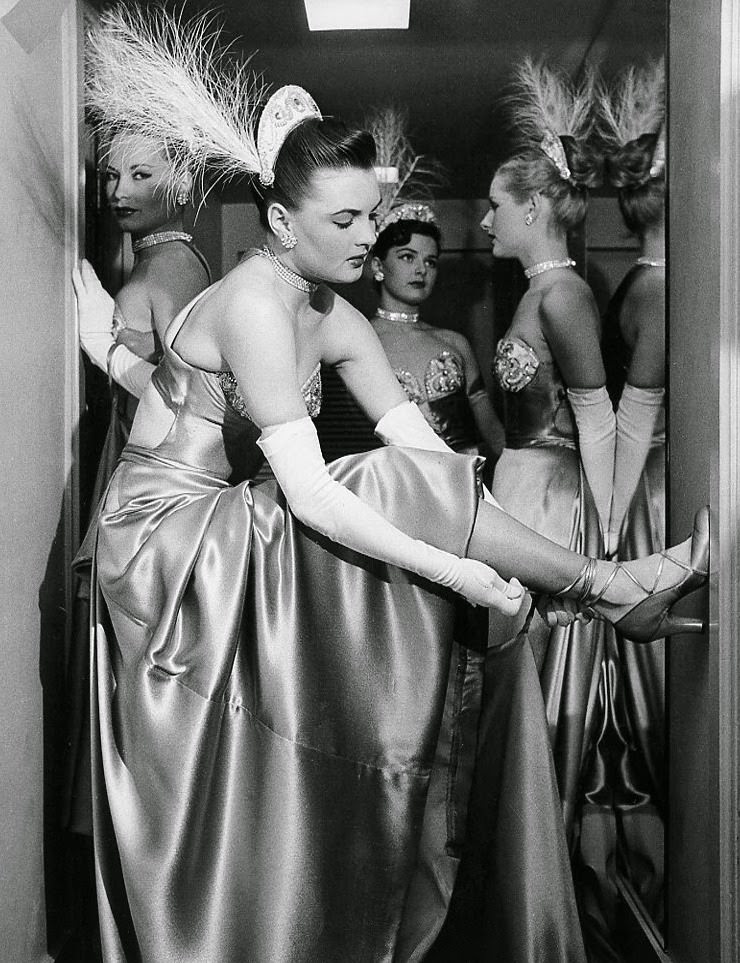
Satin catches the dressing-room light as one dancer braces herself in a doorway, lifting a leg to fasten a strappy heel with the calm focus of someone minutes from the curtain. Around her, feathered headpieces and gleaming bodices signal the choreographed glamour audiences expected, while the cramped backstage space tells a quieter story of teamwork and routine. The title names the chorus girls—Rita Powers, Patty Hurdy, Louisa Lewis, and Joan Wynn—anchoring the scene in the lived reality behind the spotlight.
Mirrors, shoulders turned at different angles, and a tangle of costume details create a small world of preparation: gloves smoothed, necklaces settled, posture checked one last time. Their expressions read as professional rather than performative, suggesting the discipline that sustained mid-century stage and nightclub entertainment. In this 1940s moment, showgirl fashion becomes not just decoration but a kind of uniform—structured, shimmering, and designed to move in unison.
Backstage photographs like this are invaluable for fashion and culture history because they preserve what posters and publicity shots often hide: the work of getting ready. The scene emphasizes texture—feathers, satin, and rhinestone sparkle translated into grayscale—while hinting at the sounds and timing of a production just out of frame. For readers drawn to vintage performance, chorus line style, and the everyday labor behind theatrical glamour, this image offers an intimate, SEO-friendly window into 1940s dance culture.