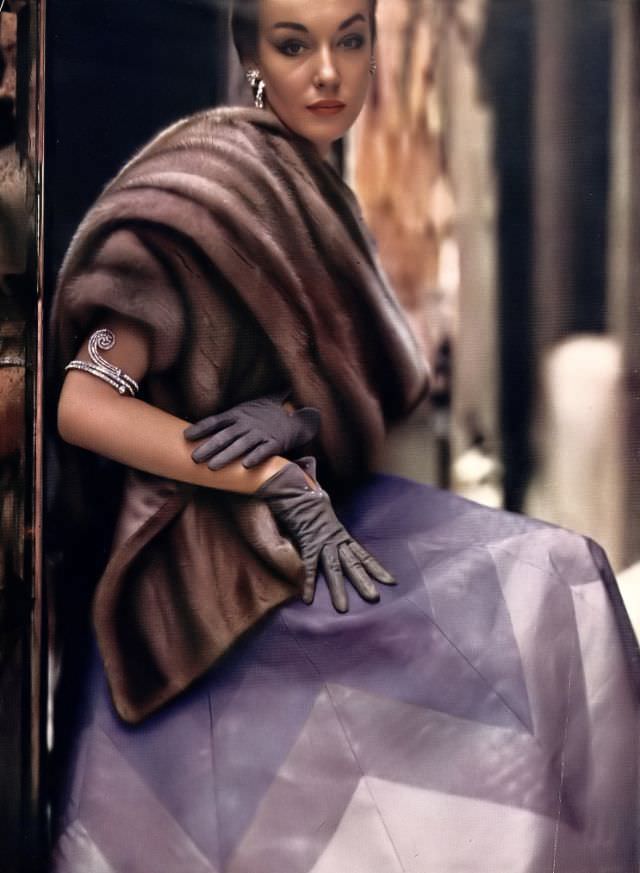
Poised in a doorway-like setting, model Liz Pringle turns a calm, self-possessed gaze toward the viewer, her makeup and arched brows lending a sculpted, mid-century elegance. Statement earrings catch the light, while a slim bracelet and matching gloves add a note of polished restraint. The softly blurred background keeps attention fixed on her composed posture and the confident, editorial mood of early-1950s fashion photography.
Draped “to wrap around and around,” the EMBA silver-blue mink stole from Deanfield Furs becomes the centerpiece, its plush bands layered over her shoulders like wearable architecture. The fur’s cool-toned sheen reads as both luxurious and modern, designed to look effortless even as it signals status and meticulous styling. Beneath it, a full skirt in a subtly geometric pattern provides contrast—smooth fabric against dense mink—highlighting the era’s love of texture, volume, and refined drama.
February 1951 sits at a moment when glamour was being carefully staged for magazines and advertisements, pairing couture-like silhouettes with aspirational outerwear. This portrait balances intimacy and display: a seated pose, gloved hands arranged with care, and a color palette that emphasizes “silver-blue” sophistication without shouting. For fashion and culture history, it offers a vivid snapshot of postwar luxury, showcasing how fur stoles, accessories, and tailoring worked together to define an ideal of feminine grace.