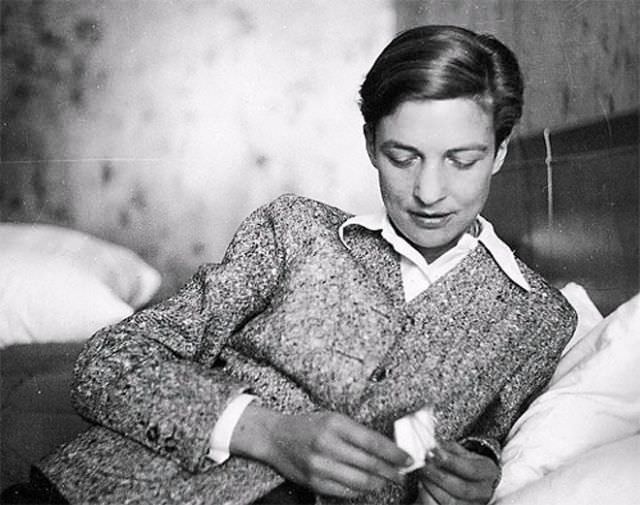
Leaning back against a pillow, the young woman in this 1930s scene wears a tailored, speckled jacket with a crisp white collar—an outfit that borrows confidence from menswear without losing its own elegance. Her hair is neatly slicked and side-parted, and the relaxed pose feels intimate rather than posed, as if we’ve stepped into a private moment. Small details—structured shoulders, clean lines, and a practical silhouette—hint at the tomboy spirit that ran just under the decade’s polished surface.
Tomboy styles of the 1930s weren’t simply about dressing “like a man”; they were about choosing clothes that moved, worked, and signaled self-possession. The jacket’s close fit and formal collar suggest a fascination with sharp tailoring, while the overall look avoids fussiness and decoration. In a time when many fashion images pushed glamour, pieces like this offered a rebellious edge: understated, modern, and quietly assertive.
Fashion and culture meet here in the way style becomes a language of everyday independence. The photograph’s soft interior setting contrasts with the crisp structure of the clothing, emphasizing how radical a clean-cut look could feel in ordinary life. For readers searching women’s fashion history, 1930s tomboy fashion, or vintage androgynous style, this image provides a striking reminder that rebellion can be subtle—and that a well-cut jacket can say plenty on its own.