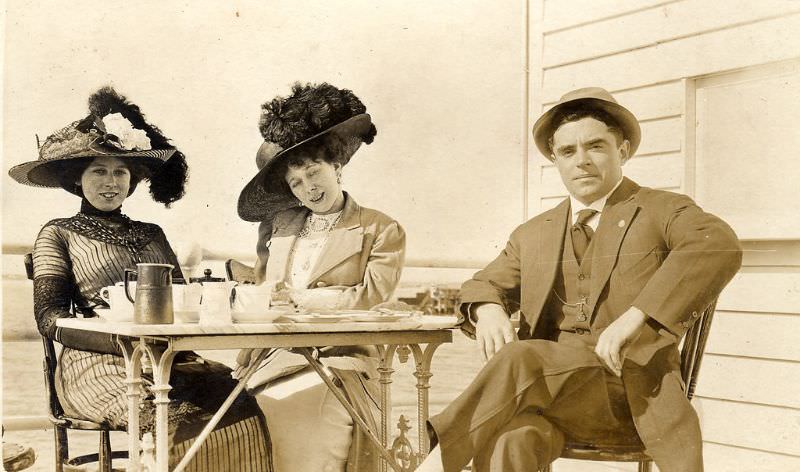
Sunlight spills across a seaside terrace where two women, seated at a small table, turn their elaborate Edwardian hats into the true focal point of the scene. Wide brims frame their faces, trimmed with dramatic plumes and lush decorations that signal both fashion confidence and the era’s love of ornament. Even at rest, the hats create a silhouette as expressive as any formal portrait, designed to be noticed in public spaces like promenades, cafés, and holiday resorts.
Across from them sits a well-dressed man in a suit and tie, his more restrained headwear and tailored layers underscoring the contrast between menswear practicality and women’s statement millinery. The tabletop details—a metal pitcher, cups, and plates—suggest a leisurely pause for tea or refreshments, the kind of social ritual that made dress codes matter. In moments like this, hats were more than accessories; they were social signals, balancing taste, status, and the latest trends from milliners and fashion magazines.
Along the wooden building at the right edge and the open horizon beyond, the photograph quietly evokes the Edwardian appetite for modern leisure and outdoor sociability. The women’s hats—bold, feathered, and carefully styled—reflect a period when craftsmanship and spectacle defined respectable fashion, especially for daytime wear. For readers searching Edwardian era hats for women, early 1900s fashion, or the cultural history of millinery, this image offers a vivid glimpse of how style operated in everyday life as well as on the grand boulevard.