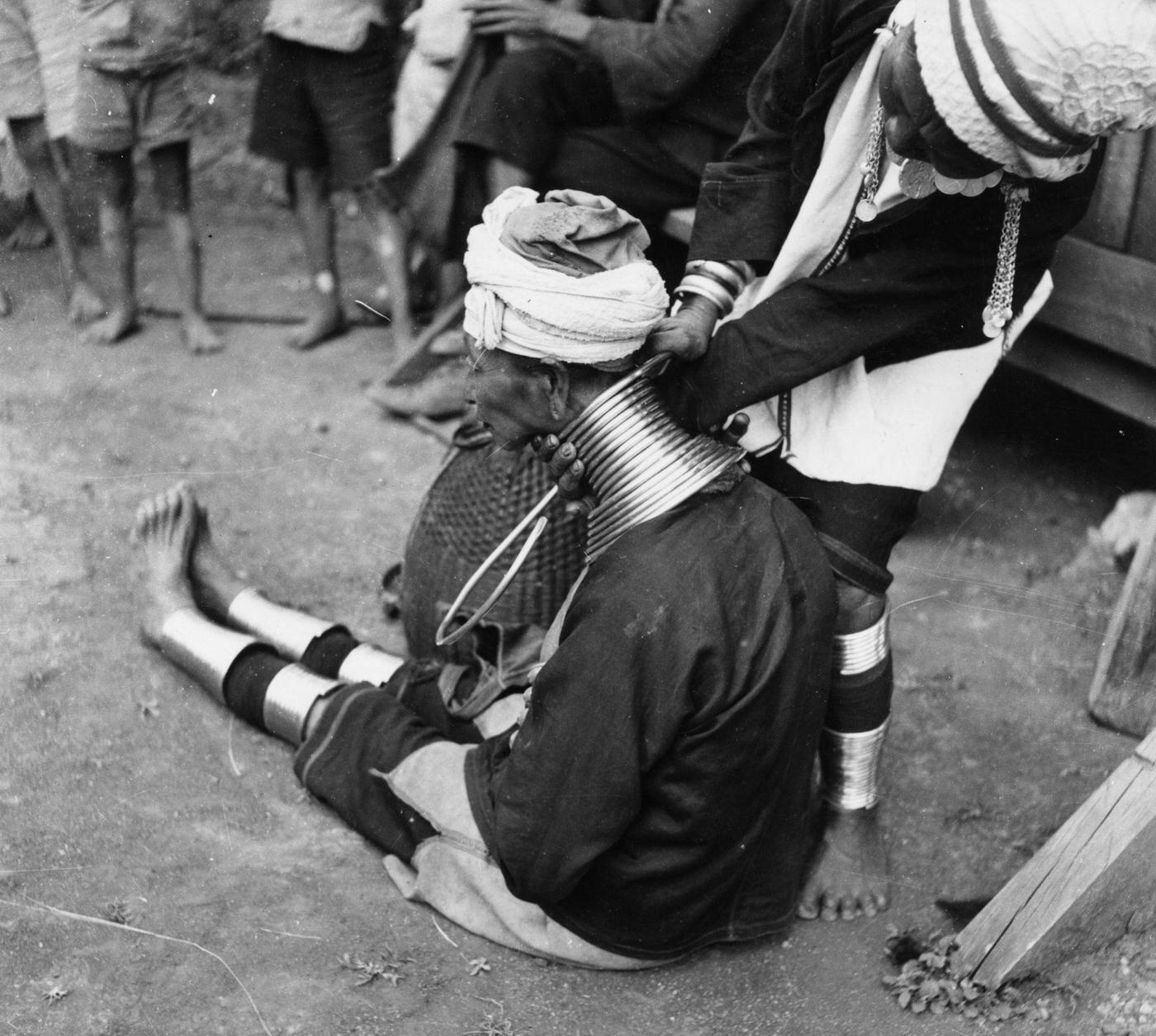
Kneeling on packed earth, a Padaung woman steadies herself as a thick coil of brass is worked into place around her neck. The photographer lingers on the tactile details—the smooth, stacked rings catching light, the cloth headwrap, and the quiet concentration in her posture—while figures in the background fade into a soft blur. Even without color, the metal’s sheen and the worn textures of everyday clothing give the moment a striking immediacy.
At her side, another woman leans in to guide the fitting, hands positioned with practiced care as the new ring settles among those already worn. Matching bands around wrists and legs echo the neck coil, turning the body into a layered display of adornment and identity. The scene reads like a small public ritual: intimate work performed in the open, observed by a loose circle of onlookers whose presence suggests community awareness rather than spectacle.
Often described in travel writing as “giraffe women,” the Kayan Lahwi (Padaung) practice of wearing neck rings is better understood through images like this—grounded in lived experience, skill, and social meaning. The title places the photograph in Burma in 1950, a period when outside cameras increasingly entered local worlds and shaped how traditions were seen abroad. As a piece of cultural history and fashion anthropology, the photograph invites viewers to look past the shorthand and notice the human scale of the act: weight, patience, craftsmanship, and the everyday dignity of dress.