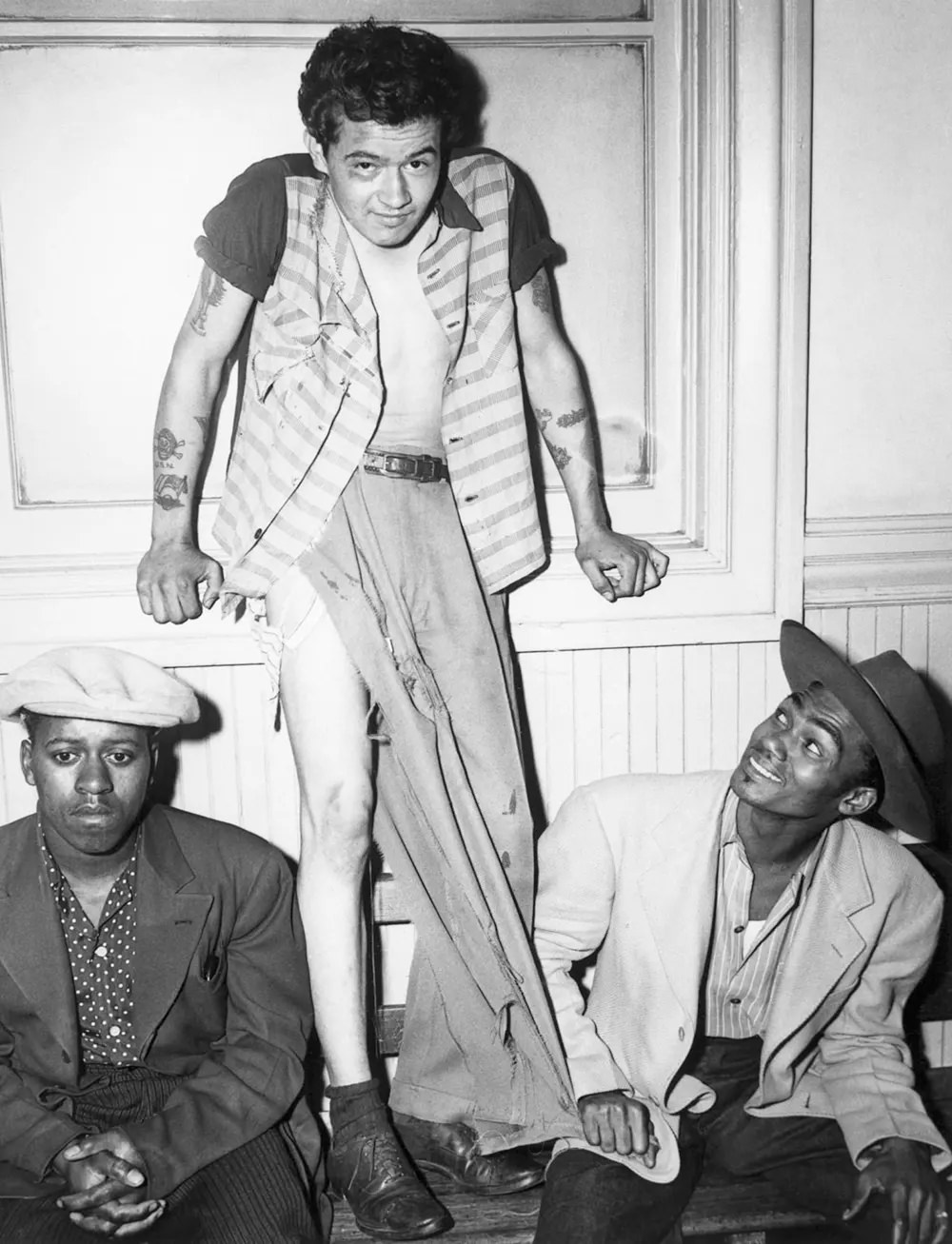
Paul Acevedo stands braced against a paneled wall, his posture tense and his expression caught between defiance and exhaustion. The damage to his clothing is hard to miss: ripped fabric, an open vest, and trouser legs that hang unevenly, suggesting a recent struggle rather than simple wear. Stark lighting flattens the room into bright planes and deep shadows, turning a moment of vulnerability into a public record.
On either side, two sharply dressed men in zoot-suit style anchor the composition, their tailored jackets and hats emphasizing the era’s distinctive silhouette. One sits with a guarded, unsmiling face; the other tilts upward with a faint grin, as if reacting to Acevedo’s stance or to someone just beyond the frame. Together, the contrast between tattered garments and polished outfits makes fashion itself the photograph’s central argument, not merely a backdrop.
Dated June 8, 1943, the scene resonates with the cultural tensions often associated with the Zoot Suit Riots, when clothing became a flashpoint for identity, policing, and belonging. The image reads like a study in how style can signify pride and community while also inviting scrutiny in a charged public atmosphere. For readers searching the history of zoot suits, wartime street culture, and the politics of appearance, this photograph offers a visceral snapshot of conflict written directly onto fabric and flesh.