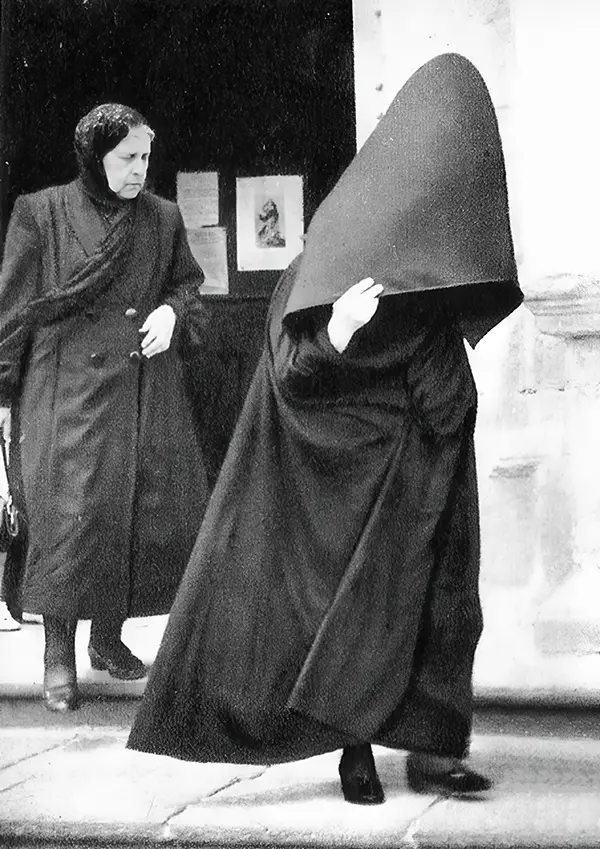
A sweeping hooded cape dominates the scene, its dramatic, forward-tilting silhouette turning the wearer into a moving triangle of dark cloth. The figure steps along a stone curb with one hand lifted to steady the fabric, suggesting wind, brisk weather, or the practical habit of keeping the hood in place. Behind her, another woman in a long, buttoned coat and headscarf watches from the edge of a doorway, adding a quiet, everyday counterpoint to the striking garment in the foreground.
Known as the Azorean hood, this traditional Portuguese women’s cape evokes both modesty and presence—concealing the face while announcing itself through bold shape and volume. The heavy, dark textile reads as protective and purposeful, suited to island life where damp air and sudden gusts can shape daily routines. In this kind of historical street photography, clothing becomes a record of lived experience: how women moved, how they kept warm, and how community norms were stitched into outerwear.
Small background details—posters or notices on the wall, the hard geometry of the stonework—place the fashion within a working streetscape rather than a staged studio portrait. That contrast is part of the enduring fascination of Azorean cultural dress: it appears theatrical at first glance, yet it belongs to ordinary errands, conversations, and thresholds. For readers drawn to Portuguese history, traditional costume, or Atlantic island heritage, the image offers a memorable glimpse of fashion as culture, identity, and practical design in motion.