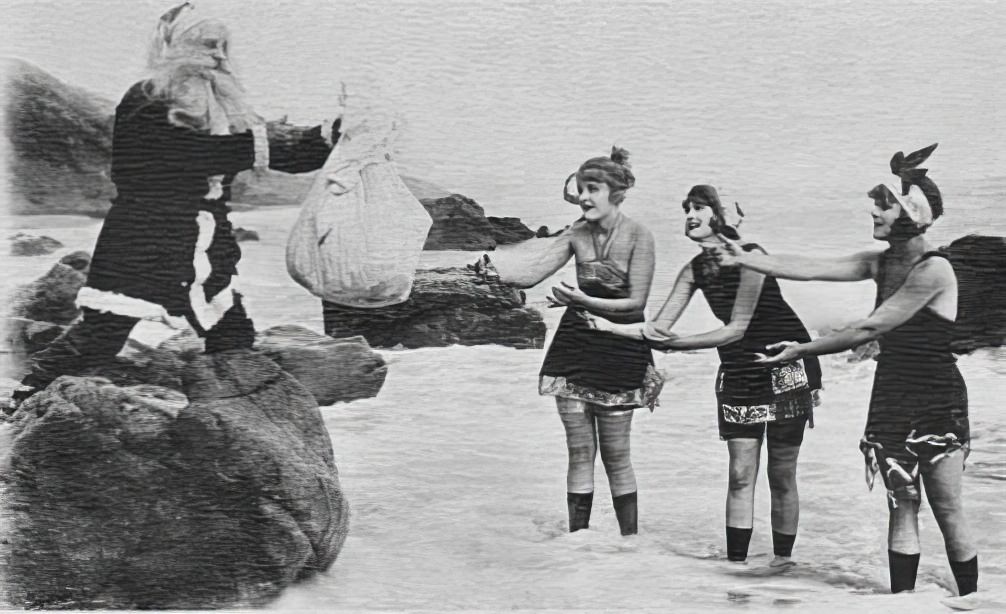
Perched on a jagged seaside rock, a bearded figure dressed in a Santa-like costume extends a bulging sack toward three young women wading at the water’s edge, turning the surf into a stage for slapstick surprise. The women—posed with open hands and animated expressions—wear the era’s modest yet form-fitting bathing outfits, complete with short skirts, dark stockings, and oversized bows that read clearly even in the grain of an early publicity still. Behind them, waves break against scattered boulders, grounding the scene in the familiar coastal backdrop that silent-era filmmakers loved for its natural light and ready-made drama.
Sennett’s Bathing Beauties were more than a chorus line in swimsuits; they were a carefully crafted symbol of modern leisure and the new kind of screen-ready glamour emerging in the mid-1910s. Here, fashion and performance blur: the structured bathing costumes suggest changing attitudes toward women’s public visibility, while the playful tableau hints at the comedy shorts that helped shape early Hollywood’s visual language. The styling—hair neatly arranged, accessories exaggerated for the camera—shows how film studios translated street trends and beach culture into instantly legible icons.
Alongside the humor, the photo points to the machinery of celebrity in its formative years, when a single image could sell a film’s mood, its stars, and an aspirational lifestyle in one glance. The ocean setting evokes freedom and modernity, while the staged exchange with the costumed figure adds a wink of spectacle that made these productions widely marketable. For anyone tracing 1915 fashion and culture, this beach scene offers a vivid snapshot of how Hollywood began packaging fun, femininity, and consumer-friendly style into a new kind of popular mythology.