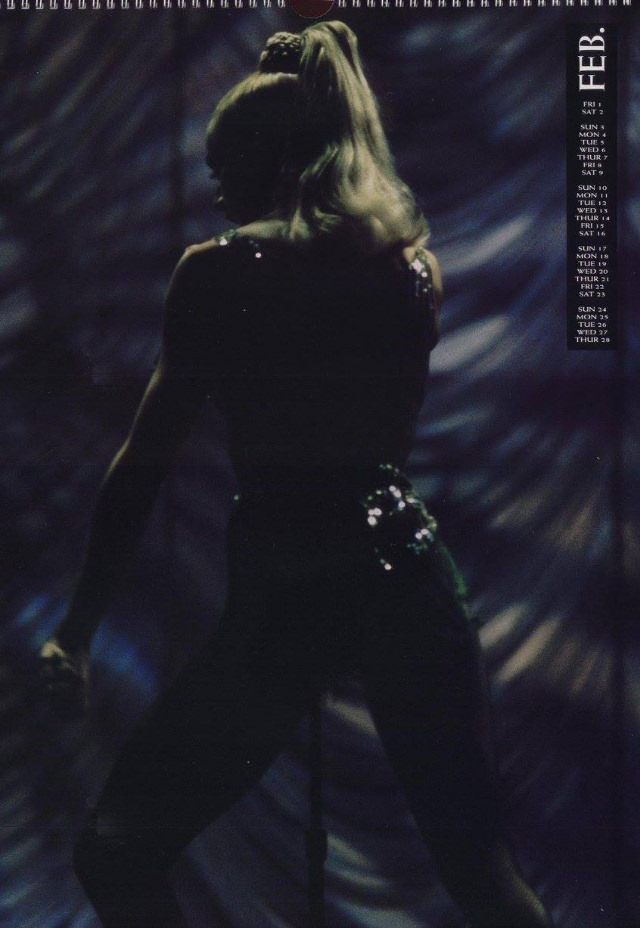
Against a smoky, stage-lit backdrop, a glamorous pop silhouette turns slightly away from the viewer, hair pulled high and cascading down the back. The pose is all performance and polish—sparkle catching along a fitted outfit while the body language suggests motion between beats. Even without a full face in view, the styling and attitude evoke the era’s bold celebrity imagery that defined 1990s fashion and culture.
Along the top edge, the spiral binding and calendar layout immediately place this as a piece of official merchandise rather than a concert still. “FEB.” stands vertically at the right, with neat rows of dates lining the margin, transforming a backstage fantasy into something meant for daily life on a bedroom wall. That blend—pinup glamour meeting practical timekeeping—was part of the decade’s fascination with turning pop stardom into collectible design.
More than a simple month marker, the photograph leans into shadow, sheen, and dramatic color to sell an identity: confident, provocative, and unmistakably of its time. The composition privileges texture—the glint of sequins, the haze of light, the sculpted outline—making it as much about fashion photography as fandom. Seen in the context of Madonna’s official calendars from the 1990s, it reads like a compact time capsule of how celebrity, style, and printed ephemera intersected before the digital age took over.