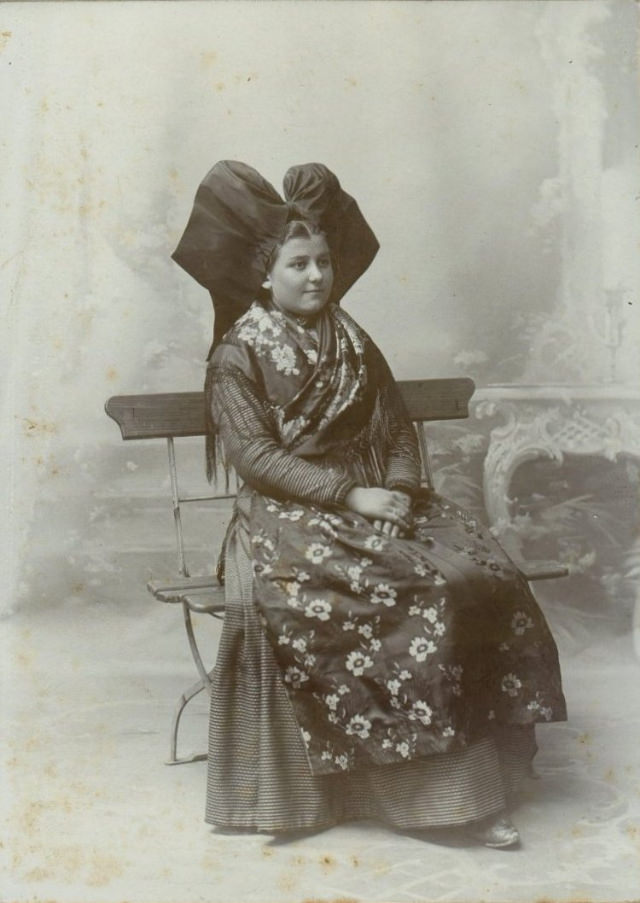
Seated in a studio setting, an Alsatian woman poses with calm self-possession, her gaze turned slightly to the side as if listening to someone just beyond the frame. The plain backdrop and simple bench keep attention on her silhouette, dominated by the region’s striking oversized bow headdress, folded into a bold, wing-like shape that frames her face. Soft lighting and a lightly worn print surface add to the sense of an early 20th-century portrait meant to preserve more than a likeness.
Her traditional costume layers pattern upon pattern: a striped dress beneath a floral apron, with a dark shawl crossing the bodice and falling in gentle folds. The careful arrangement of fabric—apron front, sleeves, and scarf—suggests both everyday practicality and the ceremonial pride of regional attire. Small details, from the neat hands resting in her lap to the polished shoes peeking from under the hem, underline how consciously such clothing signaled identity, community, and respectability.
Alsace’s folk dress became an enduring symbol of local culture, and photographs like this helped carry those symbols beyond village boundaries into albums, postcards, and memory. The dramatic headpiece in particular has come to represent Alsatian heritage in popular imagination, yet the portrait also hints at the lived reality behind the icon: a real person, patiently holding still for the camera, wrapped in textiles that speak of craft traditions and family customs. For collectors of vintage fashion history and European cultural imagery, this scene offers a clear, SEO-friendly window into early 20th-century Alsatian traditional costume and its celebrated headdress.