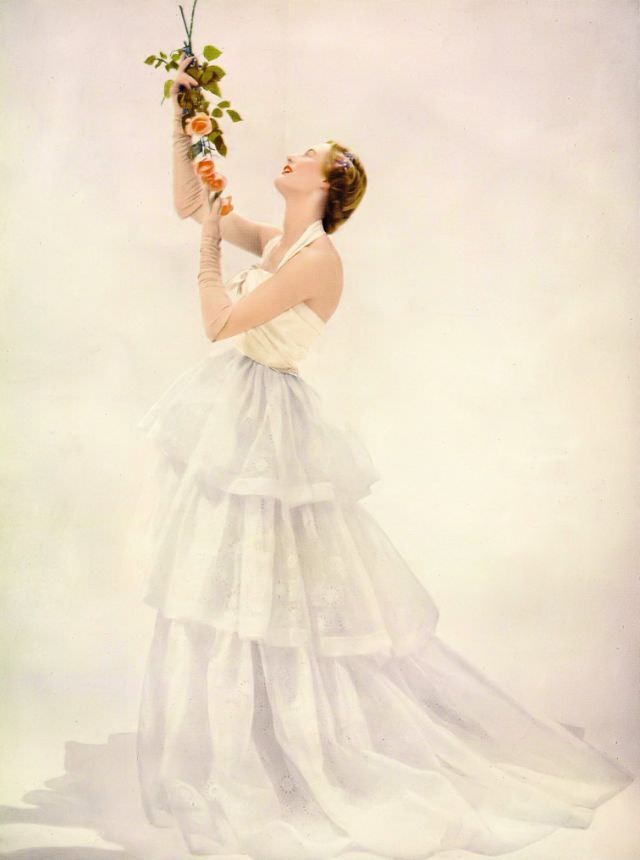
Poised in a halo of pale studio light, a model lifts a trailing spray of roses as though it were a dance partner, her gaze turned upward in a moment of theatrical reverie. The pose elongates her line from bare shoulder to fingertips, while the soft color palette—creamy whites and delicate blush—keeps attention on texture and movement rather than backdrop. Everything around her is intentionally spare, letting the fashion story unfold as an airy performance.
Victor Stiebel’s embroidered organdie dance dress reads as a masterclass in early-1950s elegance: a fitted bodice that gives way to generous, tiered layers, each one catching the light with a faintly frosted translucence. The fabric’s crisp delicacy suggests organdie’s signature structure, while the embroidery adds quiet detail that rewards a closer look without breaking the gown’s floating effect. Long, ruched gloves complete the formal silhouette, reinforcing the era’s taste for polished glamour and controlled romance.
Published in Harper’s Bazaar UK in April 1951, the image reflects how fashion magazines translated couture into aspiration—less documentary than dream, staged to evoke scent, music, and the anticipation of an evening out. The high-key styling and minimal set create a timeless editorial mood that still speaks to collectors of vintage fashion photography and mid-century design. As a record of Fashion & Culture, it preserves not only a dress, but a postwar appetite for beauty rendered light as air.