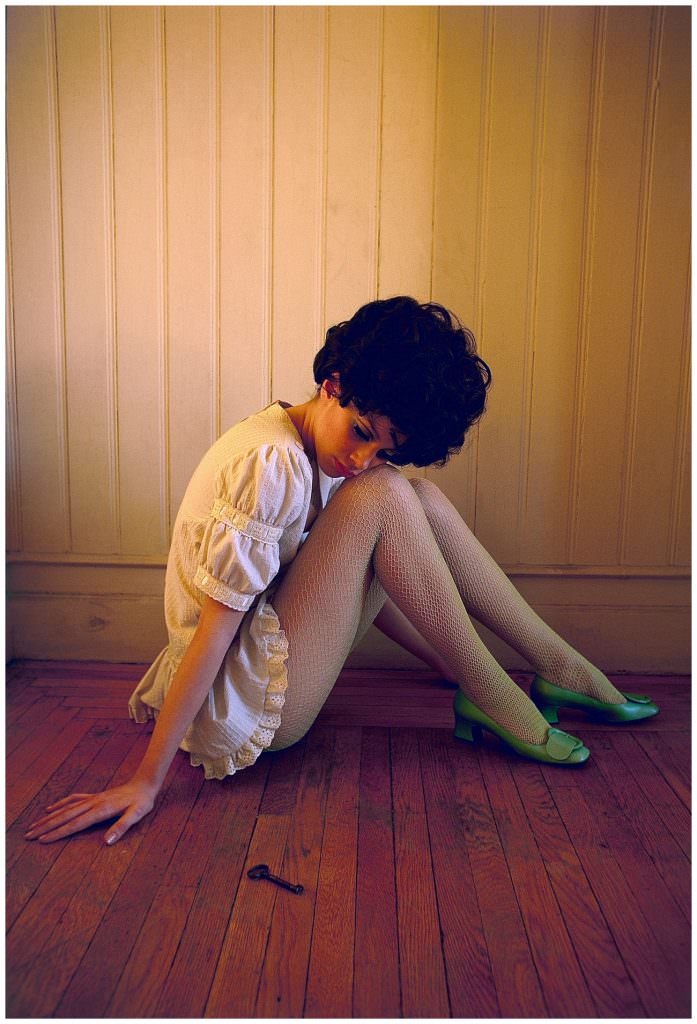
Leaning against a paneled wall on a bare wooden floor, the model curls into herself with knees drawn close, turning an iconic fashion statement into something intimate and human. The mini-dress attributed to Mary Quant reads as airy and youthful, its short hemline emphasized by textured tights and a pair of vivid green low-heeled shoes. Warm color tones and soft shadows give the scene a quiet, almost backstage feel, as if the camera has caught a pause between poses.
Art Kane’s photograph balances simplicity with attitude, letting line and texture do the work: vertical wall grooves, horizontal floorboards, and the diagonal sweep of the model’s legs. The styling nods to late-1960s modernity, where the mini wasn’t merely a garment but a shorthand for new freedoms in youth culture and women’s fashion. Rather than placing the subject in a bustling street or a glossy studio set, the restrained interior amplifies the silhouette and the mood.
Mary Quant’s name remains inseparable from the mini-skirt story, often linked to the energy of London’s fashion scene and the way trends traveled through music, magazines, and photography. Here, the look is less about spectacle and more about the everyday daring of the era—short, playful, and unapologetically contemporary for 1968. For readers searching the history of 1960s style, this image stands as a memorable intersection of fashion design, cultural change, and Art Kane’s distinctive eye.