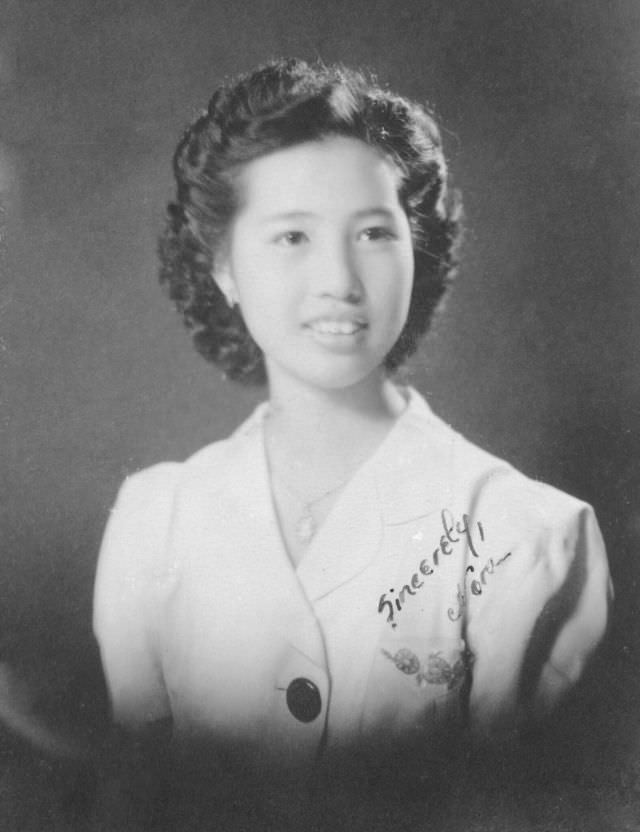
Soft studio lighting draws the eye to a young Manila woman posed in three-quarter view, her expression calm and attentive as she looks slightly off camera. Her hair is styled in neat, sculpted waves that frame the face, a popular look in early 1900s portraiture and a reminder of how photography helped circulate beauty standards across the city’s social circles. The background is plain and dark, keeping attention on the sitter’s features and the careful polish of the composition.
Fashion details do much of the storytelling here: a light-colored tailored jacket with structured shoulders, a bold single button, and a small necklace that adds a restrained touch of elegance. The crisp lapels and confident silhouette suggest an era when Manila ladies were blending cosmopolitan trends with local tastes, using clothing to signal modernity, education, and social presence. Even without a visible setting, the portrait communicates refinement through posture, grooming, and the subtle sheen of formal studio work.
An inscription on the garment reads “Sincerely,” followed by a handwritten name, hinting that the photograph may have been shared as a personal keepsake—an intimate artifact of friendship, courtship, or family ties. Such vintage portraits from Manila are more than charming images; they are records of aspiration and everyday dignity, capturing how women presented themselves within the fashion and culture of the early twentieth century. For anyone exploring Filipino history, Manila fashion, or antique photography, this kind of studio portrait offers a direct, human connection to the period’s evolving style and identity.