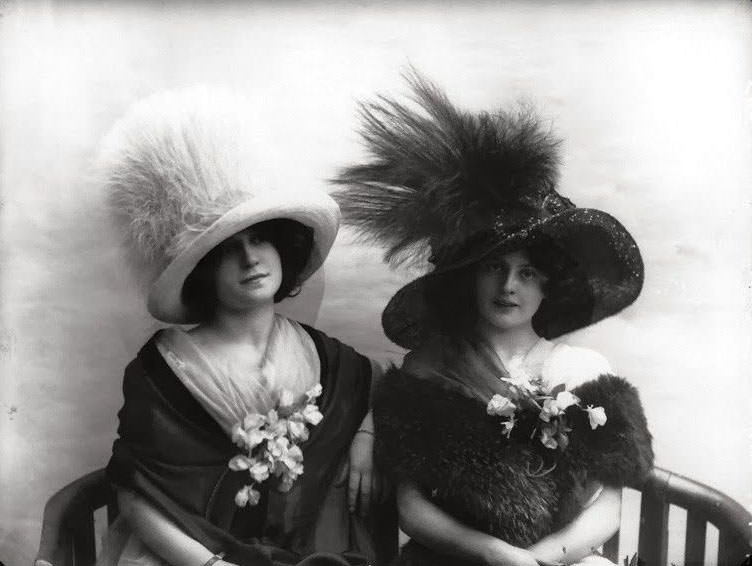
Feathered millinery dominates the scene as two well-dressed women sit closely on a wooden bench, their wide-brimmed Edwardian hats rising like soft architecture above calm, composed faces. One hat reads light and airy, a pale brim crowned with a spray of plume, while the other is darker and more dramatic, its sweeping feathers fanning upward and outward. The studio backdrop is plain and misty, a deliberate choice that pushes all attention toward silhouette, texture, and the careful balance of brim and height.
Attention drifts from the hats to the rest of the ensemble: layered shawls, delicate lace at the neckline, and a small cascade of flowers pinned at the bodice, suggesting the era’s fondness for ornament and refined display. These accessories were never mere decoration; they signaled taste, respectability, and participation in modern consumer culture, from department-store counters to specialized milliners. Even in a still portrait, the clothing communicates the social choreography of the time—how a woman “appeared” in public could speak as loudly as words.
Behind the beauty lies a story of craft and controversy, since Edwardian-era women’s hats famously relied on feathers and trims that were as coveted as they were contested. The extravagant plumes seen here evoke the period’s fascination with natural motifs and theatrical scale, when a hat could serve as a statement piece that framed the face and announced fashion literacy at a glance. For anyone searching the history of Edwardian fashion, women’s hats, and early 20th-century style, this portrait offers a clear, memorable example of how an accessory could define an era.