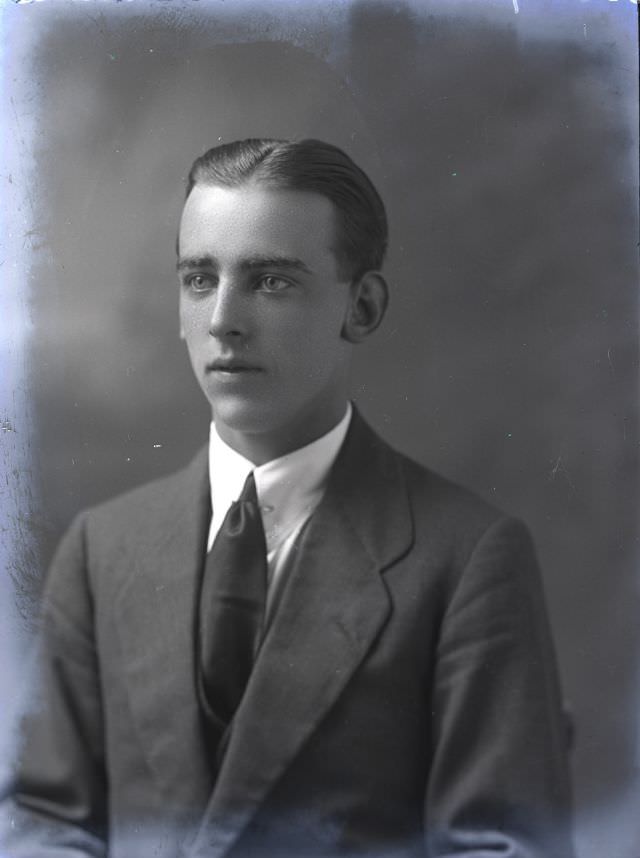
A young man sits for a studio portrait with the calm, forward-looking composure that defined so much Edwardian-era style. His hair is neatly parted and smoothed back, framing a clean profile and attentive gaze, while the plain backdrop keeps every bit of attention on grooming and dress. The soft lighting and careful focus give the image that polished, aspirational feel common to early 20th-century portrait photography.
What stands out is the suit: a structured jacket with broad lapels, worn over a high, crisp collar and a dark tie that falls in a restrained, formal line. The overall effect is “grown-up” without excess—exactly the sort of look many teenage boys and young men adopted as they moved toward adult roles in school, work, and public life. Even without flashy accessories, the tailoring and posture communicate respectability, discipline, and an awareness of fashion.
Photos like this are a reminder that youth culture did not begin with modern streetwear; it has long been shaped by the desire to look the part. Edwardian teenage boys’ fashion often echoed men’s business attire, translating ideals of propriety into everyday clothing choices and studio keepsakes. For anyone researching Edwardian menswear, early 1900s suits, or the history of youth style, this portrait offers a clear, intimate glimpse into how “dapper” was defined in an earlier age.