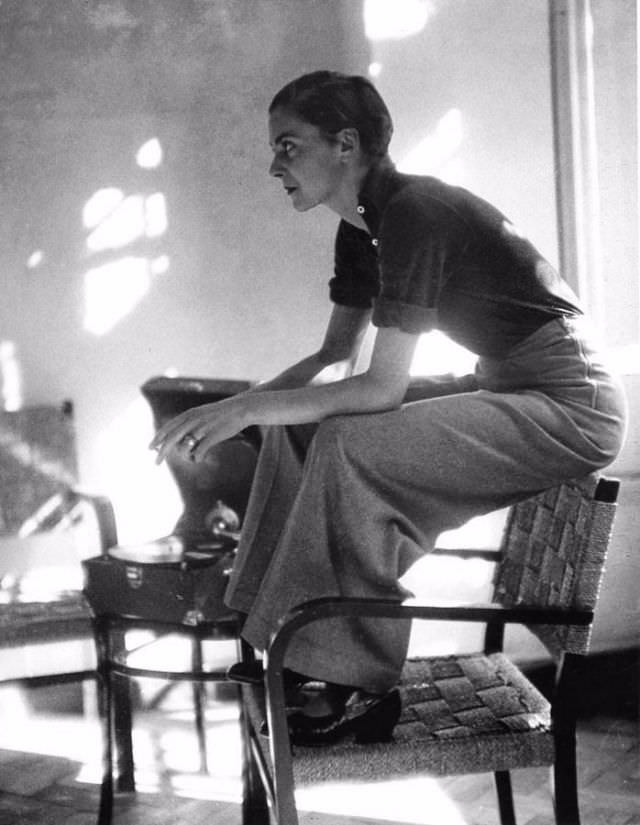
Leaning forward on a woven chair, the woman in this scene wears a crisp collared shirt with rolled sleeves and high-waisted, wide-leg trousers—an outfit that reads as purposeful rather than decorative. Light pools across the wall behind her, sharpening the silhouette of practical shoes and an unfussy, slicked-back hairstyle. The overall impression is calm confidence: a poised figure dressed for movement, work, and modern life.
Tomboy styles of the 1930s weren’t simply about borrowing from menswear; they were about redefining what women could look like while still appearing polished and intentional. Trousers, tailored lines, and pared-back accessories created a rebellious edge that felt contemporary, especially when paired with strong posture and a direct, almost cinematic presence. In photos like this, fashion becomes a language of independence—quietly challenging expectations without needing spectacle.
For readers interested in 1930s women’s fashion, this post explores how sharp silhouettes and utilitarian details shaped a distinctive fashion-and-culture moment. The setting’s everyday furnishings and candid mood suggest clothing worn in real life, not just on a runway: garments made to sit, stride, and take up space. Seen through a historian’s lens, the tomboy look emerges as both style statement and social signal—one that still influences modern tailoring, streetwear, and minimalist dressing today.