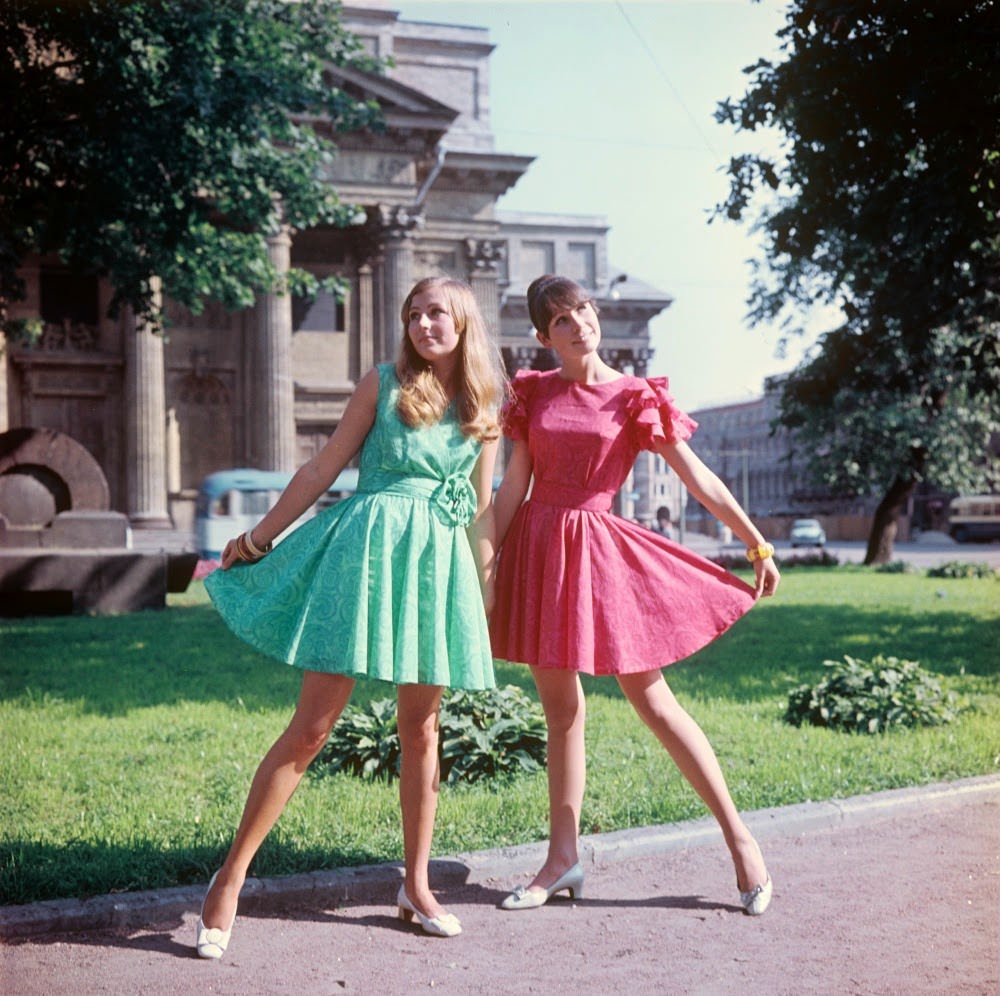
Sunlit and playful, two young women pose on a city path, each holding the hem of a bright, full-skirted dress as if mid-twirl. One wears a mint-green sleeveless frock with a cinched waist and a floral accent, while the other opts for a vivid pink dress with ruffled sleeves; both pair their looks with tidy low heels that emphasize the clean, feminine silhouette. The color film itself feels part of the story, turning everyday street style into a small celebration of Soviet-era youth fashion.
Behind them rises a grand, columned building that lends a classical backdrop to modern, 1960s–70s-inspired shapes—short hemlines, fitted bodices, and the confident swing of skirt volume. The scene suggests a moment of leisure in an urban park or civic square, where greenery and stone architecture frame a snapshot of fashionable self-expression. Even without luxury cues, the careful styling—hair neatly set, simple accessories, coordinated shoes—signals how much attention went into looking put-together.
What makes the photograph linger is its balance of conformity and individuality, a hallmark of women’s fashion in the Soviet Union as trends filtered through local taste, available fabrics, and home sewing skills. These dresses speak to the era’s appetite for bold color and youthful optimism, while their straightforward construction hints at practicality and resourcefulness. As a piece of fashion and culture history, it captures how style could flourish in public spaces—bright, modern, and unmistakably personal.