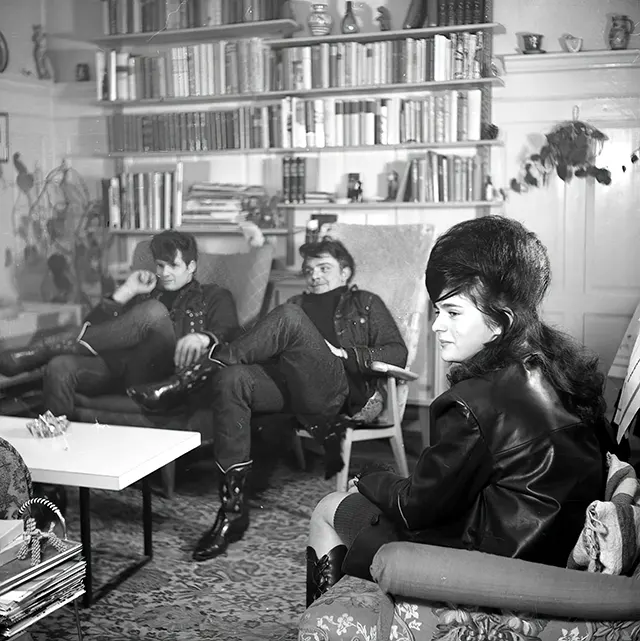
Leather jackets dominate the room, catching the light as a small group of youths lounge with the practiced ease of a subculture that knows it is being watched. One woman in the foreground turns slightly away from the camera, her high, sculpted hairstyle and sharp profile creating a striking silhouette against the soft clutter of a lived-in interior. Behind her, two young men sprawl on a sofa in dark denim and heavy boots, their relaxed postures projecting the cool defiance often associated with the Halbstarken.
The setting adds an intriguing contrast: a wall of bookshelves packed with volumes and small decorative objects, a modest coffee table, and patterned upholstery that suggests a domestic, middle-class space. That tension between homey respectability and rebellious style is part of the story these vintage photos tell—how youth culture could transform an ordinary living room into a stage for attitude, identity, and belonging. Details like the shiny boots, denim seams, and fitted leather hint at rock ’n’ roll influences and the broader postwar fascination with American-inspired fashion, reinterpreted through local tastes.
What makes images like this so enduring is their candor: the Halbstarken look less like posed models and more like friends caught mid-conversation, testing out new personas in real time. Their bold fashion choices—slick outerwear, statement hair, and an unmistakably confident slouch—read today as early signals of modern street style and youth rebellion. For fashion and culture history, the photograph offers a compact lesson in how clothing, posture, and private spaces together shaped a generation’s public image.