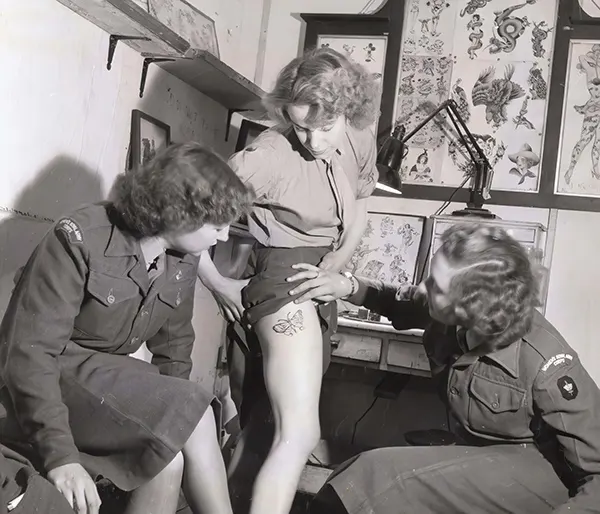
Rolled-up skirt and a quick twist at the waist turn a routine moment into a small performance as a woman in the British Royal Army Corps shows off a fresh tattoo on her upper thigh. Two fellow servicewomen in uniform lean in from either side, their attention fixed on the new ink, while the subject’s posture suggests equal parts pride and playful daring. The tattoo itself—neatly outlined and still crisp—stands out as a personal flourish against the tidy, practical lines of wartime dress.
Behind them, the setting reads like a tattoo studio, with sample designs pinned across the wall and a work lamp poised over the station, lending the scene a candid, documentary feel. The mix of military uniforms and decorative flash sheets creates a striking contrast: official service on the outside, individual expression just beneath the hem. Details like the structured jackets, carefully waved hair, and the women’s animated, conversational focus make the photograph feel immediate rather than staged.
In 1940, when women’s roles in the armed services were expanding under the pressures of war, a tattoo could signal camaraderie, independence, or a private talisman carried into uncertain times. The image also fits comfortably into fashion and culture history, hinting at how style persists even in uniform—through grooming, attitude, and the choice to adorn the body. For modern viewers searching wartime photography, women in uniform, or the history of tattoo culture in Britain, this snapshot offers an intimate glimpse of identity asserted in the margins of duty.